

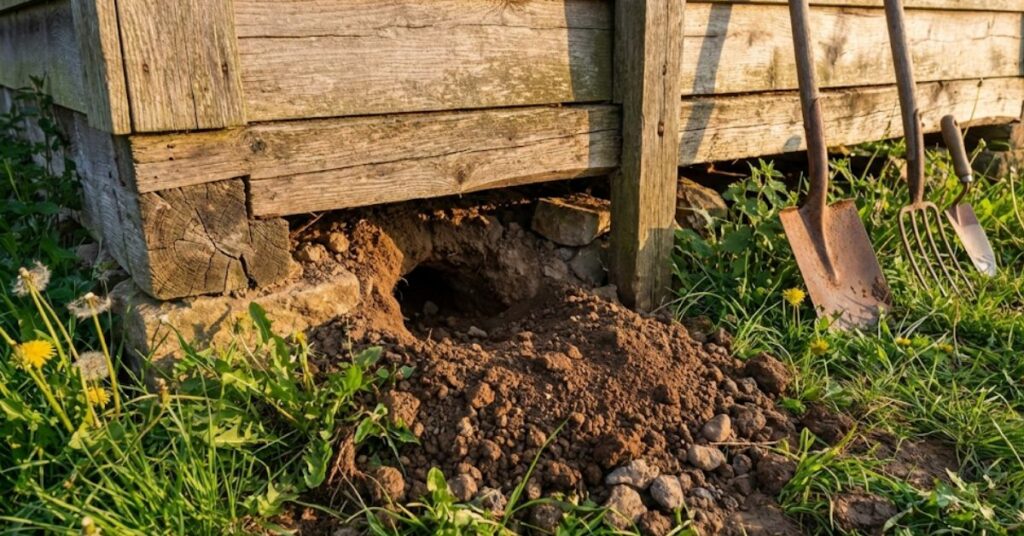
I walked out to the backyard this morning with a fresh cup of coffee only to see a massive pile of dirt right under the corner of my tool shed. It wasn’t just a little mound; it looked like someone had tried to install a basement without telling me. If you’re staring at a similar mess, you’ve got a groundhog—also called a woodchuck or “whistle pig”—taking up residence.
The problem with these guys isn’t just that they’re ugly or that they eat your prize tomatoes. It’s that they are engineering experts. They can dig tunnels up to 60 feet long, and if those tunnels are under your shed foundation, your floor is going to crack. Period. You don’t need a $500 professional service to fix this, but you do need to stop using myths like mothballs or “magic” sprays that don’t do squat.
The 45-Second Answer: How to Get Rid of Groundhogs Under a Shed?
The most effective way to get rid of groundhogs under a shed is exclusion. You must wait until the animal leaves to forage (usually early morning), then install a heavy-duty hardware cloth “L-skirt” buried 12 inches deep around the foundation. This creates a physical barrier that stops them from digging back in.
Why Your Current Methods Are Failing
I hear it all the time. People toss mothballs under the shed or dump a gallon of ammonia down the hole. Save your money. Groundhogs are stubborn. They’ll just move to a different part of the tunnel or wait for the smell to dissipate. Also, mothballs are toxic to the soil and your pets.
To actually solve the problem, you have to understand their schedule. In January 2026, many groundhogs in the Northern US and Canada are still in deep hibernation, but as soon as that first warm snap hits, they wake up hungry. If you try to seal the hole while they’re inside, they’ll either starve (which smells terrible) or dig a new hole right through your floor because they’re desperate to get out.
The Exclusion Strategy: Your Best Weapon
Exclusion is a fancy word for “building a fence they can’t get through.” Because groundhogs are world-class diggers, a regular fence on top of the grass is useless. You have to go underground.
- Identify the entries: Most sheds have one main entrance and a couple of “back doors.”
- Dig a trench: You need a trench about 12 inches deep and 12 inches wide around the base of your shed.
- Install the Mesh: Use 1/4-inch or 1/2-inch galvanized hardware cloth. Do not use chicken wire; they’ll chew through that in ten minutes.
- The L-Shape Trick: Bend the bottom of the mesh outward into an “L” shape. This is vital because when the groundhog tries to dig down at the wall, it hits the mesh and gives up.
Cost of Groundhog Removal (DIY vs. Pro)
| Method | Estimated Cost | Effectiveness | Effort Level |
| DIY Mesh Exclusion | $40 – $80 | High (Permanent) | High (Digging) |
| Live Trapping (Rental) | $20 – $50 | Medium (Temporary) | Low |
| Professional Removal | $300 – $600 | High | Zero |
| Store-Bought Repellents | $15 – $30 | Low | Low |
Using Smells They Actually Hate
While I’m grumpy about most “home remedies,” some scents actually work because they trigger a “predator” response. Groundhogs have a very sensitive nose. According to research from The Old Farmer’s Almanac and several university extensions, sulfur-based repellents or predator urine (like coyote or fox) can make them move out voluntarily.
If you don’t want to buy coyote pee—and I don’t blame you—try crushed garlic mixed with water and a bit of dish soap. Spray it heavily around the entry. They hate the sting of the garlic, so they might decide your neighbor’s shed looks more inviting.
The Ethics of Trapping and Relocating
Before you go out and buy a live trap, check your local laws. In many states and European regions, it is actually illegal to relocate a groundhog to a park or a “nice woods” somewhere else. Why? Because you’re just making it someone else’s problem, and relocated animals often die because they don’t know where to find food or shelter.
If you do trap, you usually have to release them on the same property or euthanize them. I prefer the exclusion method because it lets them stay in the neighborhood but keeps them away from my foundation. Check our latest News updates for any new local wildlife regulations that might have changed this season.
Keeping the “Whistle Pigs” Away for Good
Once you’ve kicked them out and sealed the shed, you have to make your yard less of a buffet. Groundhogs love tall grass and woodpiles because it gives them cover. If your backyard looks like a jungle, you’re asking for trouble.
Keep your grass mowed short and move woodpiles at least 20 feet away from any structures. If you have a garden, you might want to look into our Raised Bed Soil Calculator to see how much dirt you need to build higher beds that are harder for them to reach.
Quick Answers (Because I Know You’ll Ask)
Do coffee grounds get rid of groundhogs?
Not really. Some people swear by the smell of used coffee grounds, but a hungry groundhog will walk right over them to get to your lettuce. It might work as a very temporary deterrent, but it’s not a solution.
Will mothballs keep groundhogs away?
No. Mothballs are ineffective against groundhogs and are a hazard to your soil and local groundwater. Most wildlife experts strongly advise against using them outdoors.
How deep do groundhogs dig?
Their burrows are typically 2 to 5 feet deep. This is why just putting a board over the hole doesn’t work; they can easily dig under any shallow obstacle.
What smell do groundhogs hate most?
They absolutely despise the smell of lavender, mint, and garlic. Planting these around your shed can act as a natural “keep out” sign, though it’s not as foolproof as a metal barrier.
Can groundhogs climb?
Yes, they are surprisingly good climbers. If your shed has a low roof or lattice work, they can use it to get inside. This is why your exclusion mesh needs to be securely attached to the shed wall.
Is it okay to use smoke bombs in the holes?
Only if the hole is far away from your house or shed. Do not use gas cartridges under a building because you could start a fire or trap the animal where it will rot and cause a massive odor problem.
Final Thoughts on Your Furry Tenants
Dealing with groundhogs is a test of patience. You’re going to be sore from digging that trench, and you might get a little mud on your boots, but it’s the only way to protect your property. Don’t fall for the “easy” fixes that come in a plastic bottle. Real problems require real, physical solutions.
If you need help with the tools for the job—like picking the right spade or choosing the best hardware cloth—visit hometoolcreatives.com for our latest guides. Now, go get that trench started before they wake up from their winter nap.
Related Post:
