
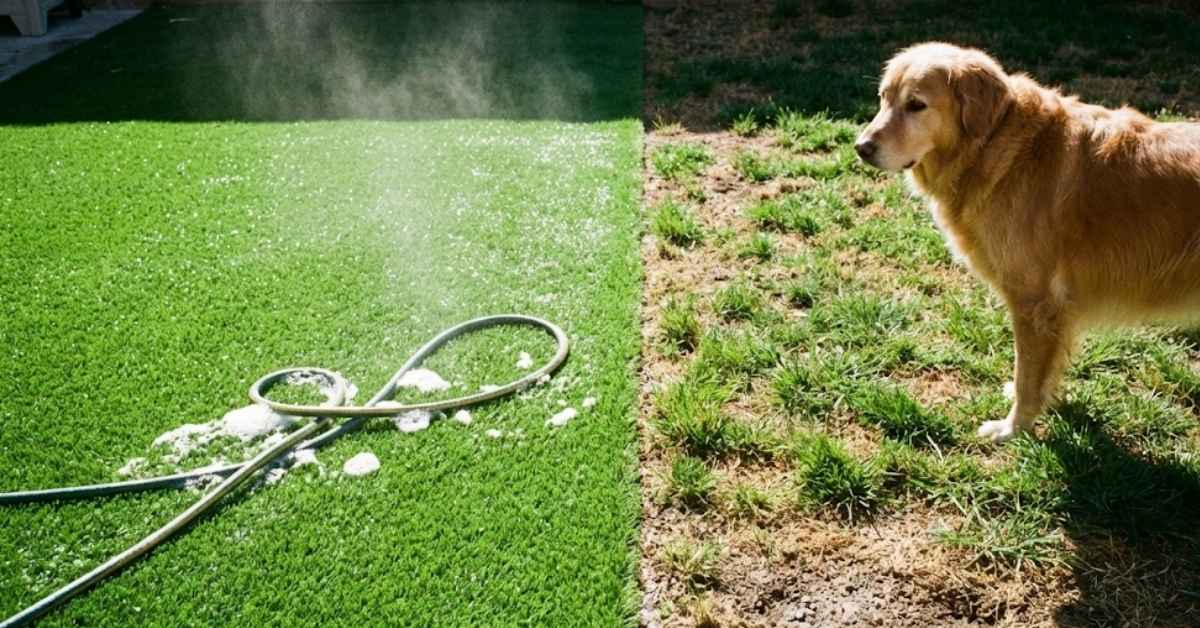
I have spent thirty years with my boots in the mud. I have planted enough fescue to cover a small moon and I have seen every “miracle” lawn product fail in real-time. But nothing gets my blood pressure up like those glossy brochures for artificial turf. They tell you it is “maintenance-free” and perfect for pets. They are lying to you so that they can sell you a giant plastic rug that costs ten thousand dollars.
If you have a dog you are not just buying a lawn; you are buying a giant, outdoor bathroom. Real grass is a living filter. It breathes. It breaks down waste. Plastic turf is just a non-porous surface that traps heat and smells until your backyard feels like a hot dumpster in July.
Why is artificial grass bad for dogs?
Artificial grass is bad for dogs because it lacks the natural biological filtration of real soil. Urine becomes trapped in the synthetic backing and infill, creating persistent odors and bacterial growth. Furthermore, synthetic turf can reach temperatures over $150^\circ\text{F}$ in the sun, which can burn sensitive paw pads.

The Smell of a Thousand Summer Afternoons
Think about it. When your dog does his business on real soil, the microbes in the damp earth get to work. They break things down. When that same dog goes on plastic grass, the liquid trickles through the blades and sits in the “infill” sand or rubber. It stays there.
Even with a special drainage system, you are fighting a losing battle against physics. Within six months that expensive green carpet will smell like a locker room. You will find yourself out there with a bottle of bleach and a garden hose every weekend, which defeats the whole “no maintenance” promise. I have seen homeowners try every chemical under the sun but nothing beats the natural smell of clover and fresh dirt. You can read more about real lawn care truths at hometoolcreatives.com where we skip the marketing fluff.
Artificial Turf vs. Natural Grass for Pets (2026 Comparison)
| Feature | Artificial Synthetic Turf | Natural Grass / Clover |
| Surface Temp (Full Sun) | $150^\circ\text{F} – 170^\circ\text{F}$ | $85^\circ\text{F} – 95^\circ\text{F}$ |
| Odor Retention | High (Ammonia trap) | Low (Biological breakdown) |
| Installation Cost | $8 – $20 per sq. ft. | $0.50 – $2 per sq. ft. |
| Lifespan with Large Dogs | 5-8 Years (Matting) | Indefinite (With seeding) |
| Environmental Impact | High (Plastic waste) | Positive (Oxygen/Cooling) |

The Burning Paw Problem and Brown Noise Benefits
There is a sensory disaster happening in these yards. In 2026 our summers are getting hotter. Real grass stays cool because it transpires—it basically sweats to keep itself comfortable. Plastic does not sweat. I have measured turf temperatures that would melt a chocolate bar in minutes. If it is too hot for your bare feet it is too hot for your dog’s paws.
While you are hiding inside from your melting lawn you might be using a sound machine to drown out the neighborhood. Many people are discovering brown noise benefits for relaxation. Unlike white noise which can be sharp, brown noise has a deeper, rumbly frequency like the low hum of a fridge or a distant thunderclap. It helps you focus while your dog is pacing on that hot plastic outside. We cover a lot of these lifestyle secrets on our homepage because a home should be a sanctuary, not a source of stress.
3 Better Alternatives for Your Backyard
If you are tired of the muddy paws and the yellow spots in your grass do not buy the plastic rug. Try these instead.
- Clover Mix: Clover is tough. It stays green with almost no water and it does not turn yellow when your dog uses it. Plus it feels like soft velvet under your feet.
- Stone Dust Run: Build a specific “potty area” using pea gravel or stone dust. It drains instantly and you can keep the rest of your yard for real grass.
- Hardy Tall Fescue: This is the rusted metal of the grass world. It is tough, deep-rooted, and can handle the “gritty sand” and abuse of a large dog.
Check out our latest news updates for more reports on why “modern” home trends are often just expensive mistakes.
Stop Treating Your Yard Like a Living Room
Your backyard is an ecosystem. When you replace it with plastic you kill the birds, the bees, and the natural cooling of your property. You are paying a premium for a product that will eventually end up in a landfill.
Trust the dirt. Trust the snap of a dry twig and the feeling of real soil. It might take a little more work to seed a lawn than to roll out a rug, but your dog and your nose will thank you. For more honest advice on keeping your home and garden real, visit the News category at hometoolcreatives.com.
Related Post:
