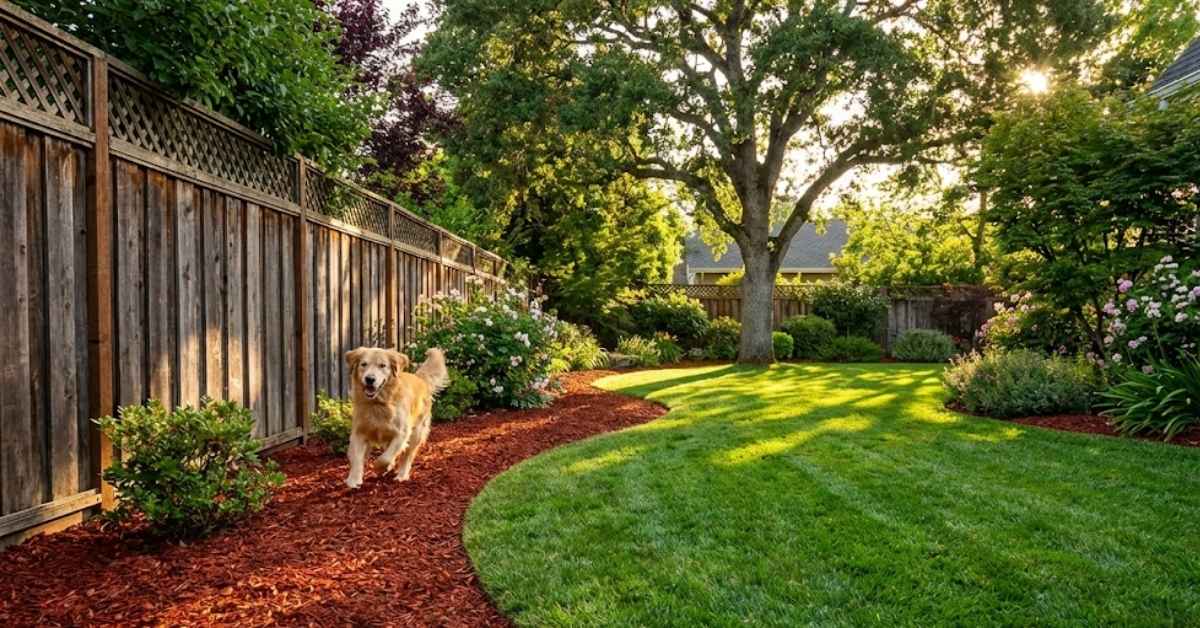
I’m tired of seeing beautiful backyards turned into muddy obstacle courses. You know the look: those brown, beaten-down paths where your Golden Retriever does his daily 500-meter dash. Most “pros” will tell you to just buy more expensive sod or spray some “miracle” green paint on the dirt. That’s nonsense. It’s expensive, it doesn’t last, and your dog doesn’t care about your $4-a-square-foot grass.
If you want a yard that doesn’t look like a construction site, you need to stop fighting your dog’s natural instincts and start working with them. Pet friendly backyard landscaping isn’t about fancy gazebos; it’s about creating a dedicated “dog track” or “zoomie zone” that can handle the abuse.
What is a Dog Track in Landscaping?
A dog track is a designated, high-durability path—usually running along the fence line—designed to withstand constant running and pacing. By using materials like pea gravel, cedar mulch, or specialized turf, you provide a stable surface for the dog while protecting the rest of your lawn from wear and tear.
Why Your Grass is Losing the War
Dogs are creatures of habit. They patrol fences. They chase squirrels along the same four-foot-wide strip of land every single day. Most grass types used in the US, like Kentucky Bluegrass or Fescue, simply aren’t built for that kind of repetitive friction.
When your dog runs, their claws act like little rototillers. They tear the grass out by the root and compact the soil so hard that new seeds can’t even dream of growing. Instead of reseeding for the fifth time this year, we’re going to build a track. It saves your sanity and your wallet.
Planning Your Dog Track Route
Don’t guess where the track should go. Your dog has already told you. Look for the “dead zones” where the grass is already gone. Usually, this is about 2 to 3 feet away from your fence or the perimeter of your deck.
Measure Twice, Dig Once
I’ve seen people try to make these tracks too narrow. A 12-inch path is a joke. Your dog will just run right next to it. Aim for at least 3 feet wide. This gives them enough room to bank around corners without destroying the surrounding plants.
| Material Type | Estimated Cost (per sq. ft.) | Durability | Paw Safety |
| Cedar Mulch | $0.50 – $1.00 | High | Best (Soft) |
| Pea Gravel | $1.00 – $2.50 | Very High | Good (Check heat) |
| Engineered Wood Fiber | $1.50 – $3.00 | High | Great (Playground grade) |
| Artificial Pet Turf | $5.00 – $12.00 | Extreme | Good (Needs drainage) |
The Best Materials for the Job
Stop buying cheap dyed mulch. It stains paws and often contains nasty chemicals or scrap wood with staples in it. If you’re going the mulch route, use cedar mulch. It smells better, stays put, and naturally repels fleas and ticks according to various USDA research studies.
If your yard has drainage issues, go with pea gravel. It’s small, rounded, and won’t hurt their pads. Just keep in mind that in places like Arizona or Texas, stone gets hot. If you can’t walk on it barefoot, your dog shouldn’t either.
Getting the Foundation Right
You can’t just throw mulch on top of mud and call it a day. It’ll be a soup of wood chips within a week.
- Dig down: Remove about 3–4 inches of soil.
- Edge it: Use heavy-duty plastic or metal edging to keep the track material from migrating into your good grass.
- Fabric layer: Lay down a professional-grade landscape fabric. This prevents weeds and stops your track material from sinking into the dirt.
If you are filling a large area, use a mulch calculator to make sure you don’t overbuy. Nothing is worse than having a mountain of leftovers sitting in your driveway for three weeks because you “eyeballed it.”
Dealing with the “Pee Problem”
Nitrogen in dog urine is what causes those lovely yellow spots. While the track handles the running, you still need a plan for the bathroom. I suggest incorporating a “potty station” at one end of the track using stabilized decomposed granite or a specific patch of clover, which is much hardier than standard lawn grass.
Incorporating Shade and Water
A pet-friendly yard isn’t just about the ground. If your dog is outside, they need a “cool down” spot. Planting dog-safe shrubs like Forsythia or Lilacs near the track provides natural shade. Just stay away from Azaleas or Sago Palms—those are toxic and a trip to the vet is a fast way to ruin your weekend.
Quick Answers (Because I Know You’ll Ask)
How do I stop my dog from running along the fence?
You don’t. It’s their job to patrol. Instead of fighting it, install a 3-foot wide path of cedar mulch or pea gravel. This lets them patrol without turning your yard into a mud pit.
Is pea gravel safe for dogs’ paws?
Yes, as long as it’s the smooth, rounded variety. Avoid “crushed” stone, which has sharp edges. In hot climates, make sure the area is shaded so the stones don’t burn their feet.
What is the best ground cover for dogs to run on?
Cedar mulch is the gold standard for most US backyards. It’s affordable, soft on joints, and naturally discourages pests. For a permanent, zero-maintenance fix, high-quality artificial pet turf is best, though it costs more upfront.
Will vinegar kill the weeds on my dog track?
Yes, but use it carefully. A high-concentration horticultural vinegar works, but it’s an acid. Don’t let your dog back on the track until it’s completely dry. It’s a much better alternative to glyphosate-based killers.
How do I fix a muddy dog run?
The only real fix is drainage and a change of surface. Dig out the mud, lay down landscape fabric, and fill it with 3 inches of wood fiber or gravel. If you just throw straw on it, you’re just making “dog-flavored” mud.
Can I use clover instead of grass for my dog?
Clover is great because it doesn’t yellow from dog urine as easily as grass does. However, it won’t survive heavy “zoomies.” Use clover for the low-traffic areas and a hard track for the high-speed zones.
Is rubber mulch safe for pets?
I’m not a fan. While it’s soft, it can get incredibly hot in the sun, and if your dog is a “chewer,” swallowing rubber bits is a recipe for an expensive surgery. Stick to natural wood or stone.
Final Thoughts on Your Backyard
Your yard should be a place where both you and your dog can exist without you yelling “Get off the grass!” every five minutes. Building a dedicated track isn’t giving up; it’s being smart. It keeps the mud out of your house and keeps the dog happy.
If you’re doing more than just a path—maybe adding a dog-friendly patio—check out our concrete calculator to get your material list right the first time.
For more tips on keeping your home and yard in shape during the changing seasons, take a look at our latest Home & Garden News updates. Whether it’s dealing with winter lawn care or the latest DIY landscaping trends, we’ve got you covered.
Now, stop reading and go measure that fence line. Your dog is waiting.
Related Posts:
- Why You Should Never Use ‘Auto’ Mode On Your Dishwasher (And The Better Setting)
- A Travel Expert Reveals The Hidden Plane Seat Button That Gives You 4 Inches Of Extra Room

- I Noticed My Dryer Was Taking 3 Hours To Dry: Here Is The Gross Vent Clog I Pulled Out
- Why Your Laundry Smells Musty: The 20p Pantry Staple That Fixes It Instantly

- A Top Career Coach Reveals Why Quiet Quitting Is the Fastest Way to Get a Promotion

- I Tried Hydro-Seeding My Dead Lawn and Here Is the Green Grass Result After 30 Days