
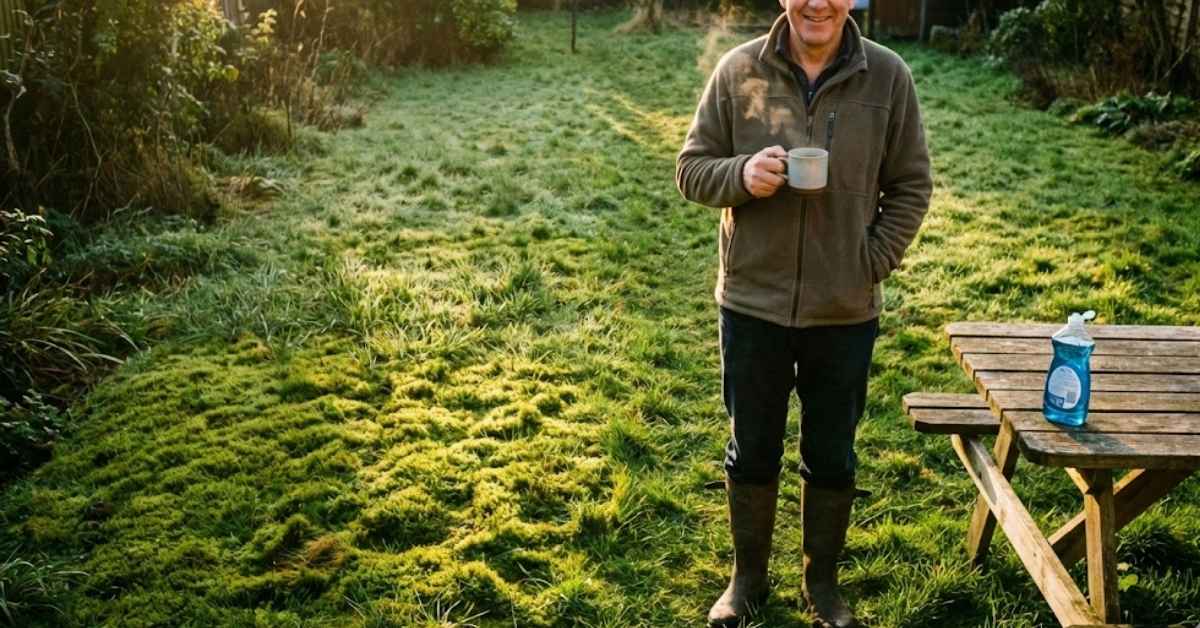
Look, I get it. You walked outside this morning with your coffee, glanced at your lawn, and saw what looked like a green shag carpet from 1974 taking over your grass. That’s moss. And before you reach for some $40 bottle of “Moss Annihilator 3000,” let me save you some money and tell you about the solution that’s probably sitting under your kitchen sink right now: dish soap.
I’ve been fighting moss for 20 years across three different properties. I’ve wasted money on fancy treatments, lime spreaders, and products with names that sound like they could also strip paint. Then one spring, out of pure frustration and stubbornness, I mixed up some dish soap with water and sprayed it on a test patch. Three days later, that moss turned black and crispy. The grass? Fine. My wallet? Still had money in it.
Here’s the straight answer: Dish soap kills moss by breaking down its waxy outer coating, causing it to dry out and die within 2-3 days. Mix 2-4 tablespoons of liquid dish soap per gallon of water, spray it on dry moss during a dry spell, and you’ll see results fast. But here’s the thing nobody tells you: killing the moss is easy. Keeping it from coming back is where most people screw up.
This guide will walk you through everything: why soap works, how to use it correctly, what mistakes to avoid, and most important, how to fix the actual problems that invited moss to your lawn in the first place. Because if you don’t fix those, you’ll be spraying soap every spring until you’re too old to push a spreader.
What Moss Really Is (And Why Your Lawn Has It)

Moss isn’t technically a weed. It’s a primitive plant that’s been around since dinosaurs were stomping through ferns. It doesn’t have real roots, it doesn’t need much light, and it absolutely loves the conditions that grass hates.
Your lawn has moss because something is wrong. Period. Grass is a competitive plant when it’s happy. When moss shows up, it means grass is struggling and moss is filling in the gaps. Here’s what’s usually happening:
Compacted soil cuts off oxygen to grass roots. I can’t tell you how many lawns I’ve seen that are basically pavement with a green tint. If you can’t push a screwdriver 6 inches into your soil without hitting resistance, your soil is too compacted.
Poor drainage creates the damp conditions moss loves. If you have standing water 12 hours after rain, or your soil feels squishy when you walk on it, you have drainage issues.
Too much shade weakens grass. Most lawn grasses need at least 4-6 hours of direct sun. Less than that, and you’re fighting a losing battle. I learned this the hard way under an old oak tree. Beautiful shade for sitting, terrible for grass.
Low soil pH matters more than most people think. Moss thrives in acidic soil (pH 5.0-6.0), while most grasses prefer slightly acidic to neutral (pH 6.0-7.0). Get a soil test kit from any hardware store for $10-15. It takes 10 minutes and saves you from guessing.
Low fertility means weak grass that can’t compete. If you haven’t fertilized in years, or if you only fertilize once a year with whatever’s on sale, your grass is probably hungry.
Here’s a reality check: I’ve seen lawns where people spray moss killer every spring and fall for a decade. The moss always comes back because they never fixed the underlying problems. Don’t be that person.
Why Dish Soap Works (The Science Part, But Simple)

Soap is what chemists call a surfactant. That means it reduces water’s surface tension and breaks down waxy or oily coatings. Moss has a thin, waxy outer layer that helps it retain moisture. When soap hits that coating, it breaks it down. Without that protective layer, the moss desiccates (dries out) and dies.
The process is mechanical, not chemical poisoning. You’re not introducing harsh herbicides or heavy metals into your soil. You’re just stripping moss of its ability to hold water. Once it’s exposed, sun and air do the rest of the work.
This is why soap works best on dry moss during dry weather. Wet moss or rainy conditions dilute the soap before it can do its job. I always check the 3-day forecast before spraying. If rain is coming, I wait.
What kind of soap works best? I’ve tested different types:
- Dawn or similar dish soap: Works great. The original blue Dawn is my go-to because it’s concentrated and cheap.
- Castile soap: Works but costs more. No real advantage.
- Laundry detergent: Don’t use it. Too many additives, fragrances, and brighteners that can harm soil biology.
- Hand soap: Usually works but check ingredients. Avoid anything with moisturizers or antibacterial agents.
The concentration matters. Too little soap won’t break down the waxy coating. Too much can potentially harm grass or beneficial soil organisms if you go crazy with it. The sweet spot is 2-4 tablespoons per gallon of water.
How to Kill Moss with Soap (The Right Way)

Here’s my process, refined over years of trial and error:
Step 1: Pick your timing. You want 2-3 dry days in a row. Check the weather. Early morning application works best because the moss is dry and you have a full day of sun to help the desiccation process.
Step 2: Mix your solution. Use a pump sprayer or hose-end sprayer. For a pump sprayer, mix 2-4 tablespoons of liquid dish soap per gallon of water. For a hose-end sprayer, follow the dilution settings but aim for the same ratio. I use 3 tablespoons per gallon as my standard mix.
Step 3: Spray the moss. Cover it thoroughly but don’t drown it. You want the moss wet, not the soil flooded. Focus on the moss patches, not the whole lawn. If you have large areas, work in sections.
Step 4: Let it work. Don’t water. Don’t walk on it. Just leave it alone for 2-3 days. The moss will turn dark brown or black as it dies. It’ll look worse before it looks better. That’s normal.
Step 5: Remove the dead moss. Once it’s dead and dry, rake it out with a stiff rake or a dethatching rake. I use a regular bow rake for small areas and rent a power dethatcher for large areas. Bag up the dead moss and toss it or compost it away from your lawn.
Step 6: Overseed immediately. This is where most people fail. You just created bare spots. If you don’t seed them fast, weeds or moss will come back. Use a grass seed that matches your existing lawn or is suited to the conditions (shade blend for shady areas, sun-tolerant for sunny spots).
| Area Size | Soap Amount | Water | Coverage | Application Time |
|---|---|---|---|---|
| Small patch (under 100 sq ft) | 2 tbsp | 1 gallon | Spot treatment | 5-10 minutes |
| Medium area (100-500 sq ft) | 6-8 tbsp | 3 gallons | Section work | 15-25 minutes |
| Large area (500-1000 sq ft) | 12-16 tbsp | 6 gallons | Full section | 30-45 minutes |
Common Mistakes People Make (Don’t Be These People)

Spraying before rain: The rain washes away the soap before it works. I wasted a whole afternoon doing this once. Learn from my stupidity.
Using too much soap: More isn’t better. I’ve seen people use half a bottle of Dawn in 2 gallons of water and wonder why their grass looks stressed. Stick to 2-4 tablespoons per gallon.
Not removing dead moss: Dead moss creates a thick mat that blocks sunlight and water from reaching soil. It also creates the perfect breeding ground for more moss. Rake it out.
Skipping the overseeding: Bare soil invites problems. Seed it, cover it lightly with compost or topsoil, and keep it moist until the grass establishes. This usually takes 2-3 weeks depending on temperature and grass type.
Ignoring the root cause: Killing moss without fixing drainage, compaction, shade, or pH is like bailing water from a sinking boat without patching the hole. You’ll be doing this forever.
Treating in hot weather: Temperatures over 85°F can stress grass when combined with soap. Stick to spring or fall when temps are between 50-75°F.
Fixing the Real Problems (Or You’ll Do This Forever)

Here’s where the work actually starts. January 2026 is perfect timing for planning your fixes before spring growth kicks in.
Dealing with Compacted Soil
Compacted soil is enemy number one. Rent a core aerator in early spring (March-April depending on your region) or fall (September-October). This machine pulls plugs of soil out, creating channels for air, water, and roots.
I aerate every fall without fail. It costs $60-80 to rent for half a day, or you can hire someone for $100-200 depending on lawn size. After aerating, spread a thin layer (1/4 inch) of compost over the lawn. This improves soil structure over time.
Fixing Drainage Issues
Poor drainage needs more aggressive fixes:
- Low spots: Fill them with topsoil and level them out. Small depressions collect water and kill grass.
- Heavy clay soil: Work in compost and consider installing a French drain if water really pools. I installed one along my back fence and it solved a moss problem I’d fought for 5 years.
- Slope issues: Regrade if water runs toward your house or pools in certain areas. This might need a professional.
Addressing Shade Problems
You have three options for heavy shade:
- Trim trees: Remove lower branches to increase light penetration. I do this every 2-3 years.
- Plant shade-tolerant grass: Fine fescues handle shade better than other grasses. They won’t be perfect, but they’re better than moss.
- Accept reality: Some spots are too shady for grass. Install shade-loving ground covers like periwinkle, pachysandra, or wood chips. I finally did this under my largest oak and stopped fighting nature.
Correcting Soil pH

If your soil test shows pH below 6.0, spread lime. The amount depends on your soil type and current pH. Generally:
| Current pH | Target pH | Lime Needed (per 1000 sq ft) | Soil Type |
|---|---|---|---|
| 5.0-5.5 | 6.5 | 50-75 lbs | Sandy soil |
| 5.0-5.5 | 6.5 | 75-100 lbs | Loam soil |
| 5.0-5.5 | 6.5 | 100-150 lbs | Clay soil |
| 5.5-6.0 | 6.5 | 25-50 lbs | Sandy soil |
| 5.5-6.0 | 6.5 | 50-75 lbs | Loam/Clay |
Apply lime in fall or early spring. It takes 3-6 months to change pH, so be patient. Retest every year until you hit your target, then test every 2-3 years to maintain it.
Building Soil Fertility
Fertilize 2-3 times per year with a balanced lawn fertilizer. I use a 20-5-10 or similar ratio in spring, a lighter feeding in summer if needed, and a fall fertilizer with higher potassium (like 10-10-20) to strengthen roots before winter.
Organic options like compost, composted manure, or organic lawn fertilizers work great but release nutrients slower. They’re better for long-term soil health. Synthetic fertilizers give faster results but don’t improve soil structure.
For guidance on soil amendments and quantities, the folks at Home Tool Creatives have some helpful calculators that can take the guesswork out of spreading materials.
Quick Answers (Because I Know You’ll Ask)
Will dish soap hurt my grass?
Not at the concentrations I recommended (2-4 tablespoons per gallon). Grass has a different leaf structure than moss and handles soap fine. I wouldn’t spray it every week, but occasional spot treatments are safe.
How long does it take for moss to die after spraying soap?
2-3 days in dry, sunny weather. You’ll see it darken within 24 hours. It’ll be crispy and dead by day 3.
Can I use this method in winter?
Yes, if temps are above freezing and you have a couple dry days. I’ve treated moss in February before. But spring and fall are ideal because you can seed right after.
Does soap work on all types of moss?
Yes. All moss species have that waxy coating that soap breaks down. I’ve used this on sheet moss, cushion moss, and whatever that thick stuff is that looks like tiny trees.
How much does it cost compared to commercial moss killers?
A bottle of Dawn costs $3-4 and treats thousands of square feet. Commercial moss killers cost $20-50 for similar coverage. You do the math.
Will moss come back after I kill it?
Yes, if you don’t fix the underlying problems. Moss is a symptom, not the disease.
Can I just ignore the moss?
Sure, if you don’t care about having grass. Moss actually prevents erosion and stays green when grass goes brown. Some people in the Pacific Northwest intentionally grow moss lawns. But if you want grass, you need to deal with moss.
Is it safe for pets and kids?
At these dilution rates, yes. Keep them off the lawn while it’s wet, but once it dries (30-60 minutes), it’s fine. Dish soap is designed to be safe for skin contact.
What about using baking soda or vinegar?
Baking soda (sodium bicarbonate) can raise pH and kill moss, but it’s less effective than soap for quick results. Vinegar works but it’s non-selective and can damage grass. I stick with soap.
Can I use a fertilizer spreader to apply soap?
No. Soap needs to be sprayed as a liquid solution to coat the moss. Use a pump sprayer or hose-end sprayer.
How often should I treat moss with soap?
Once per year as a spot treatment if needed. If you’re treating moss every month, you’re not addressing the real problems.
Should I lime and seed at the same time?
You can, but I prefer to lime first, wait 2-3 weeks, then seed. Some studies suggest heavy lime applications can interfere with germination. Play it safe.
Tools and Products I Actually Use

I’m not going to recommend garbage you don’t need. Here’s what I keep in my shed:
For applying soap:
- 2-gallon pump sprayer ($20-30): Chapin makes a good one. Get one with an adjustable nozzle.
- Hose-end sprayer ($15-25): Ortho Dial N Spray works well. Easier for large areas but less precise.
For removing dead moss:
- Bow rake ($20-30): Basic steel rake. Nothing fancy.
- Dethatching rake ($30-50): Has sharp tines that pull up moss and thatch. Worth it if you have a lot of moss.
- Power dethatcher rental ($60-80/day): For large areas. Rents from Home Depot or local equipment rental places.
For fixing problems:
- Core aerator rental ($60-80/day): Gas-powered. Does the job right.
- Soil test kit ($10-15): Luster Leaf or similar. Test pH and basic nutrients.
- Broadcast spreader ($30-100): For lime, fertilizer, and seed. I have a Scott’s that’s lasted 15 years.
For reseeding:
- Grass seed ($40-80 for 10-20 lbs): Match your existing lawn or use a shade blend for problem areas.
- Starter fertilizer ($20-30): High phosphorus (middle number) to encourage root growth.
- Peat moss or compost ($5-10 per bag): Light covering to protect seed and retain moisture.
If you’re figuring out soil volumes for topdressing or filling low spots, the raised bed soil calculator works great for lawn applications too.
Month-by-Month Moss Control Plan for 2026

Here’s what you should be doing based on current January timing:
January-February: Test soil pH. Order lime if needed. Plan your spring attack. Clear debris from lawn.
March-April: Apply lime if soil test shows pH below 6.0. Core aerate. Apply soap treatment to existing moss. Rake out dead moss. Overseed bare areas. Apply starter fertilizer.
May-June: Keep new grass watered (1 inch per week). Mow regularly but not too short (3-3.5 inches). Spot treat any remaining moss patches.
July-August: Maintain mowing height. Water during dry spells. Don’t stress grass during peak heat.
September-October: Core aerate again (best time of year). Overseed any thin areas. Apply fall fertilizer. This is prime time for grass establishment.
November-December: Final mowing of the season. Clean up leaves. Let grass go dormant. Plan next year’s maintenance.
The Real Talk Section
Look, your lawn will never look like a golf course unless you have unlimited time and money. That’s fine. The goal isn’t perfection. It’s a healthy, functional lawn that doesn’t embarrass you and doesn’t require a second mortgage to maintain.
Moss is fixable. I’ve fixed it on three different properties with different problems. Compacted clay soil in one place, heavy shade in another, and terrible drainage in the third. Each required different solutions, but the soap trick worked to kill the moss in all three cases while I worked on the bigger fixes.
The soap method saves you money and keeps harsh chemicals out of your yard. It’s effective, it’s cheap, and it’s been working for people long before I started recommending it. I didn’t invent this trick. I just tested it, refined it, and now I’m passing it along.
Don’t overthink this. Mix soap and water. Spray moss on dry days. Let it die. Rake it out. Seed bare spots. Fix the problems that caused the moss. That’s it. Everything else is just people trying to sell you stuff you don’t need.
If you want more practical advice without the marketing nonsense, check out the latest updates where we cover seasonal lawn care, tool reviews, and real solutions to common problems.
Your Action Plan (Start Here)

Here’s what you’re doing this week:
- Buy a soil test kit. Test pH in 3-4 spots where moss is worst. This tells you if lime is needed.
- Get a pump sprayer and dish soap. You probably have the soap already. Buy the sprayer if you don’t.
- Wait for 2-3 dry days. Check the forecast.
- Mix 3 tablespoons Dawn per gallon of water. Spray moss patches thoroughly.
- Wait 2-3 days. Watch moss die. Feel satisfied.
- Rake out dead moss. Bag it up. Dispose of it.
- Buy grass seed that matches your lawn. Overseed bare spots. Cover lightly with compost.
- Water new seed. Keep soil moist (not soaked) until grass is 2 inches tall. This takes 2-3 weeks.
- Fix the real problems. Based on soil test and observation: aerate, improve drainage, trim trees, apply lime, or fertilize.
- Repeat only if needed. If you fixed the underlying problems, moss won’t come back in significant amounts.
That’s it. You now know more about moss control than 90% of homeowners and probably half the lawn care companies charging $200 per treatment.
Go kill some moss. Your lawn will thank you.
