

I was sitting on my back porch last Tuesday, trying to enjoy a quiet cup of coffee, when I realized I could see exactly what brand of cereal my neighbor was eating across the fence. It is January 19, 2026, and if you’re still staring at your neighbor’s laundry line or hearing their leaf blower as if it’s in your own lap, you’ve waited too long to plant some green walls.
Look, I hate fluff. I don’t want to hear about “vibrant garden tapestries.” I want to know what I can put in the dirt today that will block out the world by next summer without me having to baby it like a newborn. We’ve had a weird start to the year with these fluctuating temperatures, so you need trees that aren’t going to roll over and die the first time the frost gets a little bite.
If you want the best privacy trees for backyard use, you need speed, density, and a lack of corporate-sponsored nonsense. Let’s get your privacy back.
The Direct Answer: What are the Best Privacy Trees for 2026?
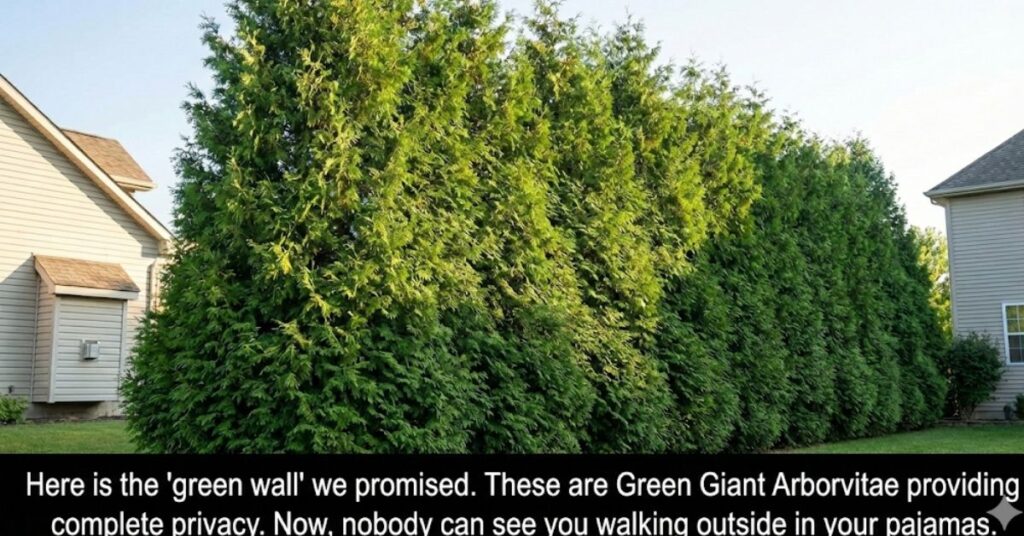
The best privacy trees for backyard use are the Green Giant Arborvitae and Leyland Cypress for rapid, 3-to-4-foot annual growth. For small yards, Emerald Green Arborvitae or Sky Pencil Holly provide dense, narrow screening. These evergreens offer year-round noise reduction and visual blocking.
The “Speed Demons”: Fastest Growing Evergreen Trees for Privacy
If you are like me, you want results yesterday. Most trees grow at a “moderate” pace, which is a polite way of saying they take forever. If you’re actually looking for fast growing hedges for privacy, you have to pick the right species from day one.
1. Thuja ‘Green Giant’ (The Champion)
This is the gold standard for a reason. It can shoot up by 3 to 5 feet per year once it gets its feet under it. It’s tough, it’s deer-resistant (unlike its smaller cousins), and it stays green through the dead of winter.
- Hardiness: Zones 5–7.
- Mature Height: 40 to 60 feet.
- Grumpy Tip: Don’t plant these 2 feet apart unless you want them to strangle each other. Give them 5 feet of breathing room.
2. Leyland Cypress
The Leyland Cypress is the sprinter of the evergreen world. It can hit 50 feet in just 15 years. It creates an impenetrable wall that blocks wind, snow, and the sound of your neighbor’s yapping dog.
- Hardiness: Zones 6–10.
- Growth Rate: Up to 4 feet per year.
3. Eastern White Pine
A North American native that doesn’t get enough credit. It has soft needles and grows over 3 feet a year. It’s great for larger parcels where you need a massive, stately barrier.
Privacy Tree Growth & Zone Comparison
| Tree Variety | Growth Rate (per year) | Hardiness Zones | Best For |
| Green Giant Arborvitae | 3–5 Feet | 5–8 | Rapid “Green Wall” |
| Leyland Cypress | 3–4 Feet | 6–10 | Wind & Noise Blocking |
| Emerald Green Arborvitae | 1 Foot | 3–8 | Small Yards/Patios |
| Hybrid Poplar | 5–8 Feet | 3–9 | Instant Summer Privacy |
| Nellie Stevens Holly | 3 Feet | 6–9 | Dense, Thorny Barrier |
Privacy Trees for Small Backyards (Space Savers)

Not everyone has an acre to play with. If you try to put a Green Giant in a 10-foot side yard, it’s going to eat your house in five years. You need privacy trees for small backyards that grow “up,” not “out.”
Sky Pencil Holly
This thing is as narrow as a literal pencil. It grows 8 to 10 feet tall but only 2 feet wide. It’s perfect for urban decks or placing right up against a fence line.
Emerald Green Arborvitae
Unlike the Green Giant, this one is a “slowpoke,” growing about 1 foot per year. It tops out at 15 feet and stays a nice, tidy 4 feet wide. It’s a space-saver that looks elegant without needing a chainsaw every weekend.
The “Living Fence”: Fast-Growing Hedges for Privacy
Sometimes you don’t want a row of trees; you want a thick, manicured hedge.
- Privet: This is the “speedy shrub” that can grow 3 feet a year. It forms a dense, thick wall that wandering eyes can’t penetrate.
- Cherry Laurel: An evergreen that thrives in the shade. It has glossy, dark green leaves and can grow 3 feet a year.
- Skip Laurel: A cousin to the Cherry Laurel, it’s great for mid-sized yards and handles full sun to partial shade.
Quick Answers (Because I Know You’ll Ask)
Can arborvitae really grow 3 feet per year?
Yes, but only if you stop ignoring them. Cultivars like the Green Giant can hit 3 to 5 feet of annual growth if they get full sun (at least 6 hours) and consistent water during their first two years.
How far apart should I plant privacy trees?
Don’t crowd them. Plant Emerald Greens every 3 feet and Green Giants or Leylands every 5 feet. Overcrowding leads to root competition and lower branches turning brown because they can’t see the sun.
When is the best time to plant?
Early spring is your best bet because it gives the roots time to settle before the summer heat hits. Fall is a close second, provided you get them in the ground before the first hard frost.
Which privacy trees are deer-resistant?
Deer treat the “Emerald Green” like a salad bar. If you have a deer problem, go with the Green Giant Arborvitae, Western Red Cedar, or Junipers—they are much less appetizing to the local wildlife.
Do I need to prune my privacy screen?
Only if you want a formal look. Many evergreens like the Green Giant have a natural pyramidal shape and require zero maintenance if you have the space. If you’re growing a hedge like Privet, plan to clip it once or twice a year to keep it tidy.
Why are the inside of my trees turning brown?
If it’s just the inner branches near the trunk, don’t panic. That’s “interior needle shed,” and it’s normal as the tree matures and the outer growth shades the inner parts. If the tips are brown, you probably have a watering or pest issue.
What is the fastest growing tree overall?
That would be the Hybrid Poplar, which can grow an absurd 5 to 8 feet per year. The downside? It’s deciduous (loses leaves in winter) and has “weak wood” that can break in heavy storms.
A Final Reassuring Word
Planting a privacy screen is the best favor you can do for your future self. It cuts down on noise, blocks the wind, and—most importantly—means you don’t have to make eye contact with your neighbors while you’re in your pajamas.
Keep an eye on the News section to see if we’re expecting a drought this summer. If we are, you’ll need to be extra diligent with the hose for those new transplants. For more honest advice on keeping your backyard from looking like a disaster zone, stick with us at Home Tool Creatives.
Now, go grab a shovel and stop letting the neighbors watch you eat your cereal.
Related Post:
