

I saw a guy yesterday already sharpening his mower blades like he was preparing for a duel. It is January 19, 2026, there’s still frost on the pumpkin, and he’s ready to scalp his fescue the second a green blade peeks through. I wanted to tell him to go back inside and have another coffee.
We need to talk about no-mow may preparation before you let the neighborhood HOA Karens get into your head. Every spring, people lose their minds trying to create a golf course in their backyard, ignoring the fact that our local pollinators are literally starving to death. But you can’t just stop mowing and call it “environmentalism” if your yard is already a mess of compacted dirt and chemical runoff.
If you want a yard that actually supports life—and stays healthy enough to survive the summer heat—you need to start planning now. I’m tired of seeing good soil ruined by bad habits. Let’s get your lawn health tips sorted out without the corporate fertilizer sales pitch.
The Direct Answer: How Do You Prepare for No-Mow May?
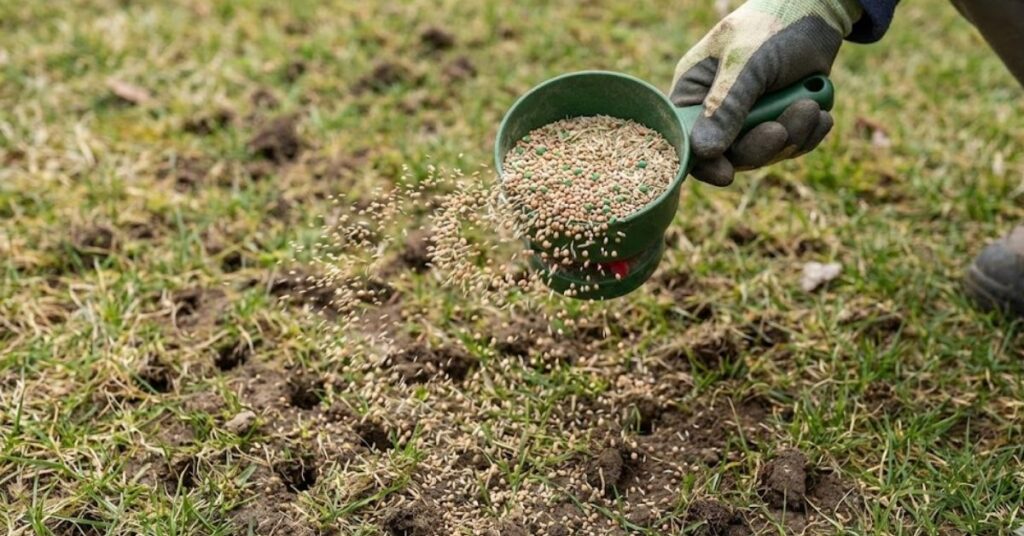
Preparation for No-Mow May involves transitioning away from broadleaf herbicides in early spring to allow clover and dandelions to bloom. You must also aerate compacted soil and overseed with pollinator-friendly mixes in March or April so that your lawn has a diverse structure before you stop mowing in May.
The “Lazy” Myth: Why You Can’t Just Quit Mowing
Listen, I love an excuse to sit on the porch instead of pushing a mower. But “No-Mow May” isn’t an excuse for neglect. If you have a mono-culture of Kentucky Bluegrass that has been pumped full of “weed and feed” for a decade, nothing is going to grow in May except tall, ugly grass.
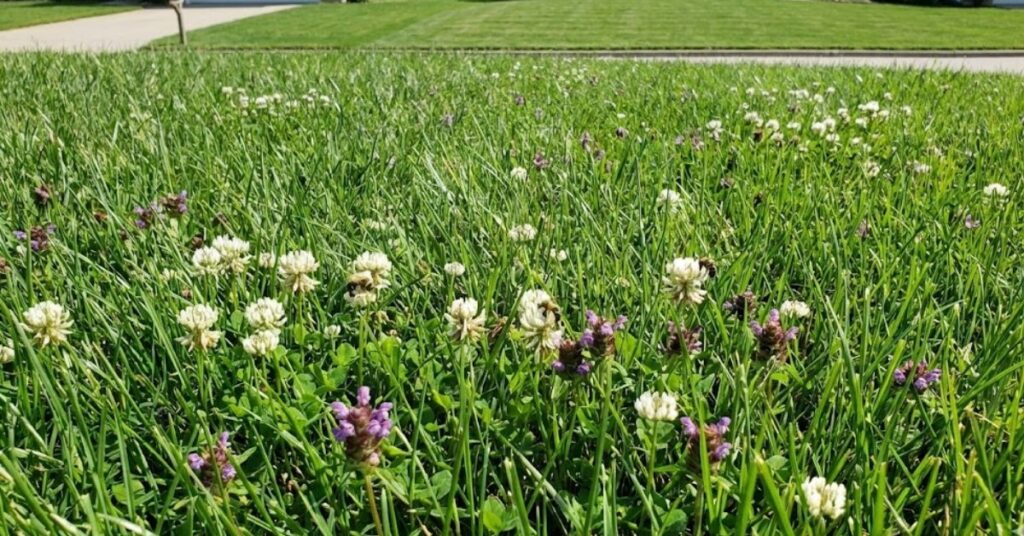
Real preparation starts with the soil. Pollinators—the bees, butterflies, and beetles that keep our food system from collapsing—need flowers. If you’ve spent years killing every dandelion like it was an invading army, you have no flowers. You need to stop the chemical warfare in March so those “weeds” (which are actually food) have a chance to show up.
Essential Early Spring Lawn Health Tips
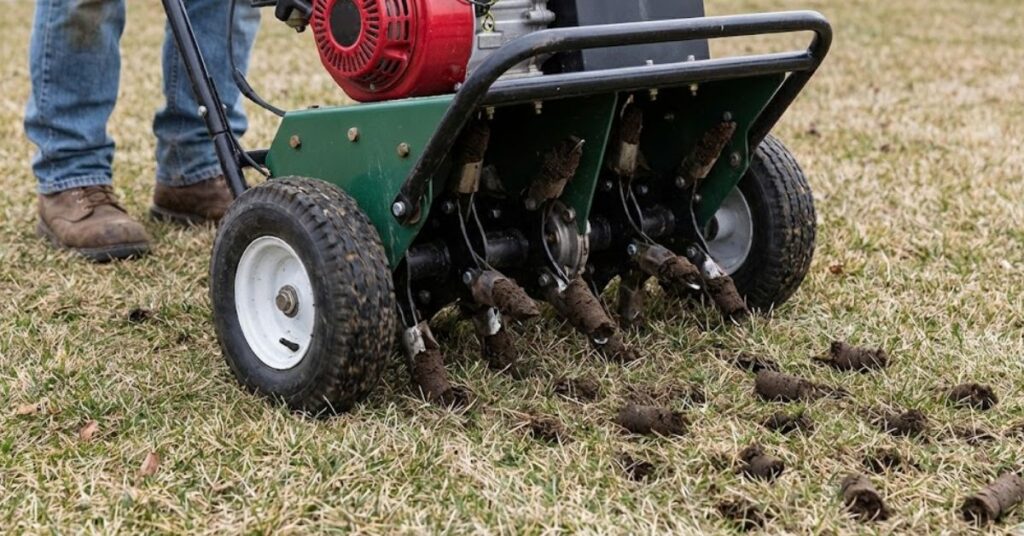
Before you lock the shed for a month, you have to give the grass a fighting chance. If the ground is as hard as a brick, water won’t sink in, and roots won’t grow deep.
- Aeration: This is non-negotiable. Use a core aerator to pull plugs of soil out. It lets the dirt breathe.
- Seeding: Don’t just buy the “standard” bag. Look for a “Bee Lawn” mix that includes Dutch white clover, self-heal, and creeping thyme.
- The Height Rule: In April, don’t scalp the grass. Keep it at 3 to 3.5 inches. Tall grass grows deeper roots, and deep roots survive the August droughts that kill your neighbor’s “perfect” lawn.
Comparing Lawn Strategies: Modern vs. Traditional
I made this table because I want you to see that “doing less” in May actually requires “doing right” in March.
| Feature | Traditional “Golf Course” Lawn | Pollinator-Friendly “Bee Lawn” |
| Mowing Height | 1.5 – 2 inches | 3.5 – 4 inches |
| Fertilizer Use | Heavy synthetic (leaches into water) | Organic compost / Clover nitrogen fix |
| Biodiversity | 1 species (Grass) | 5+ species (Grass, Clover, Thyme) |
| Water Needs | High (Constant Sprinkling) | Low (Deep roots find water) |
| Labor | Weekly Mowing | Seasonal Maintenance |
Rapid Q&A (Because I Know You’ll Ask)
Does No-Mow May cause more ticks?
Ticks love tall, brushy areas and deep woods, but research from places like the University of Minnesota suggests that a typical residential “bee lawn” kept at 4-6 inches doesn’t significantly increase tick populations compared to a 2-inch lawn. Ticks hate sun and dry air; they won’t hang out in the middle of a sunny backyard just because the grass is a bit longer.
Will my grass die if I don’t mow for a month?
No, but it might get “floppy.” The real danger is “The Great Scalping” in June. You can’t just cut 6-inch grass down to 2 inches in one day. You’ll go into “mower shock” and the grass will turn brown. You have to take it down in stages—one inch at a time, every few days.
What do I tell my HOA?
Tell them you are participating in a “Pollinator Research Initiative.” Or, better yet, just mow a “frame” around the edge of your yard. A mown border makes a long lawn look intentional rather than lazy. It’s a “Gardening & Landscaping Hack” that keeps the peace while you save the bees.
What if I have “illegal” weeds?
Check your local News section or town ordinances. Many cities in the USA have passed “No-Mow May” resolutions that temporarily suspend height restrictions. If yours hasn’t, keep your lawn at 4 inches—it’s high enough for clover to bloom but usually low enough to avoid a fine.
Is clover bad for my lawn?
Clover is a miracle plant. It takes nitrogen from the air and puts it into the soil for free. Before the 1950s, clover was included in every bag of grass seed. Then chemical companies realized they couldn’t sell you nitrogen fertilizer if you had clover, so they rebranded it as a “weed.” Don’t fall for the scam.
When should I do my first mow of the year?
Wait until the ground is dry. If you mow while the soil is soggy, you’ll cause “Backyard” ruts and compact the soil, which ruins the drainage you worked so hard on in the winter.
Should I bag my clippings?
Never. Those clippings are free nutrients. Leave them on the lawn to rot. If you have too many, you’re waiting too long between mows (except in May, obviously).
The Bottom Line
Preparing for a healthy year isn’t about being the loudest guy with the shiniest equipment. It’s about understanding that your yard is an ecosystem. Give the soil some air, put the chemicals away, and let the dandelions do their job for a few weeks.
Check our latest News to see when the first frost-free date is expected in your zone. If you start too early, you’ll just be fighting nature, and nature usually wins.
For more real-world advice on keeping your property from falling apart, stick with us at Home Tool Creatives. Now, go put your mower back in the shed and give the bees a break.
Related Posts:
