I’m tired of seeing my neighbors drag a heavy garden hose across a yellowing lawn every single July. It’s a ritual of futility. We spend billions of gallons of clean water and thousands of dollars on synthetic fertilizers just to keep a non-native plant from doing what it naturally wants to do in the heat: go dormant. It’s a money pit, and frankly, it’s boring.
If you’re ready to quit the “Lawn Care Industrial Complex,” you should look at backyard prairie landscaping. A prairie isn’t just a patch of weeds. It’s a high-performance, deep-rooted ecosystem that survives on whatever the sky gives it. Once established, these designs can slash your water bill by 60% or more because native prairie plants have roots that reach up to 15 feet deep. While your neighbor’s fescue is gasping for air, a prairie is just getting started.
How much does a backyard prairie cost to maintain?
A backyard prairie costs significantly less than a traditional lawn, typically requiring only $50–$100 annually for occasional mowing or weeding. You save thousands over time because you eliminate the need for weekly watering, expensive fertilizers, professional chemical treatments, and high-octane lawn mower fuel.
Why Your Lawn is a Financial Disaster
The average American family uses about 320 gallons of water per day, and a massive chunk of that goes straight into the grass. In states like Colorado or Texas, outdoor water use can account for half of the total bill. Grass is a “thirsty” monoculture. It has shallow roots and no defenses against a standard US summer.
When you switch to a prairie design, you’re installing plants that actually belong here. I get that the idea of “wild” looks scary to some people. You might worry about the city sending you a mean letter or your yard looking like a vacant lot. But if you use “cues to care”—like a clean mown edge or a nice garden path—it looks like an intentional, high-end landscape choice, not a mistake.
1. The Low-Profile “Pocket” Prairie
This is for the person who isn’t ready to turn their whole yard into a meadow. You pick a 10×10 or 20×20 area—maybe a corner that’s hard to mow anyway—and replace the turf with shortgrass species. Think Blue Grama and Buffalograss. These stay under 6 inches tall and require almost zero water once they’re set.
2. The Pollinator Powerhouse
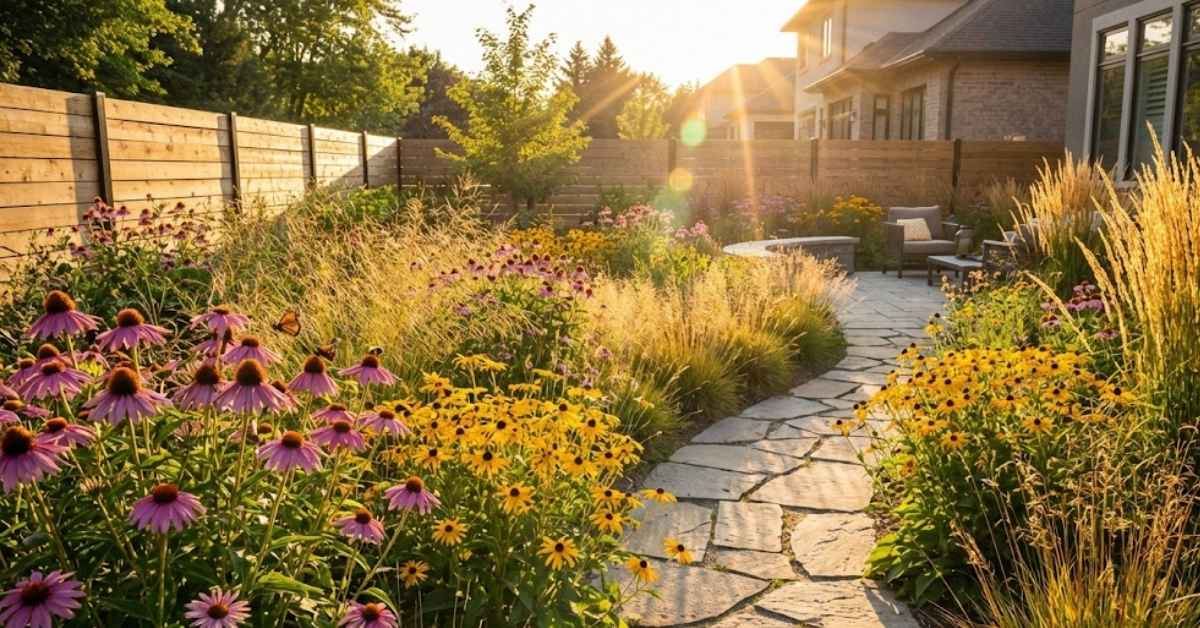
If you want to help the bees and butterflies, this design uses a mix of native forbs (wildflowers) and bunchgrasses. You’ll see species like Purple Coneflower, Black-eyed Susans, and Little Bluestem. It’s a riot of color that changes every month. The smell of sun-warmed wild bergamot is a lot better than the smell of gasoline and grass clippings, trust me.
3. The Modern Meadow (Short-Grass Mix)
This is the most “suburban friendly” version of backyard prairie landscaping. It uses a specific seed mix of fine-bladed grasses that don’t get floppy or messy. It looks like a soft, waving sea of green that eventually turns a beautiful bronze in the winter.
| Feature | Traditional Turf Lawn | Backyard Prairie |
| Weekly Water Need | 1 to 1.5 inches | 0 (after year 2) |
| Mowing Frequency | 25-30 times per year | 1 time per year |
| Fertilizer Need | High (Nitrogen-heavy) | None (Native soil only) |
| Root Depth | 2 to 4 inches | 5 to 15 feet |
| Initial Cost | Low (Seed) to High (Sod) | Moderate (Seed/Plugs) |
4. The “Rain Garden” Prairie
If you have a low spot in your yard that stays soggy after a storm, stop trying to drain it. Plant it. Using moisture-loving prairie plants like Swamp Milkweed or Joe Pye Weed creates a natural sponge. These plants break up heavy clay soil so that water can actually sink in instead of running off into the street.
Before you start digging out a rain garden, you’ll need to figure out how much soil you actually need to move. I recommend using a raised bed soil calculator to get a handle on the volume, even if you aren’t building a traditional bed. Knowing your numbers saves you from three extra trips to the garden center.
5. The Privacy Screen Prairie (Tallgrass)
Got a neighbor you’d rather not see? Big Bluestem and Switchgrass can reach 6 to 8 feet in a single season. It’s a living fence that doesn’t require painting, staining, or a permit. In the winter, the dried stalks make a lovely rustling sound in the wind and provide a home for birds.
How to Start Without Losing Your Mind
I’ve seen too many people just stop mowing and call it a “prairie.” That’s how you get a yard full of invasive thistles and a visit from the code enforcement officer.
- Kill the grass properly: Use “sheet mulching” (cardboard and mulch) or solarization. Don’t just till it up; you’ll just wake up ten years of weed seeds. If you go the mulch route, use a mulch calculator so you don’t end up with a pile of woodchips that looks like a small volcano in your driveway.
- Choose your seeds/plugs: Go to a local native plant nursery. Don’t buy those “Wildflower Mix” cans from the big box store; they’re full of filler and plants that won’t survive your specific climate.
- Be patient: The first year they sleep, the second year they creep, the third year they leap. That’s the golden rule.
Visit us at https://hometoolcreatives.com/ for more ways to make your home and garden work for you, rather than you working for them.
Quick Answers (Because I Know You’ll Ask)
How do I transition my lawn to a prairie?
Start by killing a small section of grass using the cardboard method. In the fall, scatter native seeds or plant “plugs” (small starter plants). You have to keep the weeds down for the first two years, but after that, the prairie plants will shade out the competition.
Will a backyard prairie attract snakes and rats?
Snakes like cover, sure, but they’re usually there to eat the bugs that were already in your yard. As for rats, they prefer your trash cans and bird feeders over native grass. Keep a clean mown path around the edge of your prairie to create a “border” that keeps critters away from the house.
Is backyard prairie landscaping legal in the city?
Most cities now have “Natural Landscape” ordinances. The key is making it look intentional. If you have a mown border, a sign that says “Native Habitat,” and you keep it away from the sidewalk, most HOAs and cities won’t bother you. Check your local codes first to be safe.
Do native plants really not need water?
They need water to get established during their first year. After that, their deep roots find ground moisture that grass can’t reach. During extreme multi-month droughts, they might look a bit crispy, but they won’t die like turf does.
When is the best time to plant a prairie?
Late fall is the “secret sauce” for prairie planting. Many native seeds need a cold period (stratification) to sprout. Winter does the work for you. If you miss fall, early spring is your second-best bet.
Does a prairie look messy in the winter?
It looks different. It turns shades of gold, copper, and silver. Some people call it “messy,” but I call it “bird food.” If you can’t stand the look, you can mow it down in late March right before the new growth starts.
Will my property value go down?
Actually, many modern buyers are looking for low-maintenance, eco-friendly homes. A professionally designed native landscape is often seen as a premium feature, especially in water-restricted regions like the West.
You Can Do This
Moving away from the “perfect green rug” mentality is hard. We’ve been conditioned since the 1950s to think that a mown lawn is the only way to be a good neighbor. But times have changed, and water is getting expensive. I get why this feels like a big leap, but your wallet—and your Saturday afternoons—will thank you.
Stay updated on the latest outdoor living trends and gardening news by checking out our News section regularly. We’re always tracking what’s working (and what’s a total scam) in the world of home improvement.
Go get some seeds. Your water bill is waiting to be cut.
Related Posts:
- Why You Should Never Use ‘Auto’ Mode On Your Dishwasher (And The Better Setting)
- A Travel Expert Reveals The Hidden Plane Seat Button That Gives You 4 Inches Of Extra Room

- I Noticed My Dryer Was Taking 3 Hours To Dry: Here Is The Gross Vent Clog I Pulled Out

- Why Your Laundry Smells Musty: The 20p Pantry Staple That Fixes It Instantly

- A Top Career Coach Reveals Why Quiet Quitting Is the Fastest Way to Get a Promotion

- I Tried Hydro-Seeding My Dead Lawn and Here Is the Green Grass Result After 30 Days