

It is late January 2026, and the wind is currently trying to rip the siding off my house here in the Northeast. It is the kind of cold that makes your bones ache and your coffee turn lukewarm in three minutes flat. I looked out my window this morning, expecting to see a barren, frozen wasteland. Instead, I saw a gray squirrel doing a parkour routine across my fence.
It makes no sense. The ground is like concrete. The bird fountain is a solid block of ice. Every sensible creature should be tucked away in a deep, months-long nap, right? Wrong. If you think these fluffy-tailed yard goblins are sleeping the winter away, you’ve been listening to too many bedtime stories.
Do Squirrels Hibernate?
No, squirrels do not hibernate. Unlike bears or groundhogs, squirrels stay active all winter. They survive sub-zero temperatures by growing a thick winter coat, shivering to generate body heat, and utilizing “scatter hoarding” to retrieve buried nuts. They only retreat to nests during extreme blizzards.
The Hibernate Myth: Why They’re Still Out There
I hear it every year. Someone at the hardware store tells me, “Oh, the squirrels must be hibernating because I haven’t seen them since the last snowstorm.” I usually have to bite my tongue. Squirrels are diurnal, meaning they’re up when we are, but they are smart enough to stay inside when the wind chill hits minus twenty.
They don’t have the biological hardware to shut down their systems for months. If a squirrel tried to hibernate like a woodchuck, it would simply starve to death because its body doesn’t store enough fat to last until April. Instead, they stay awake and fight the frost every single day.
Torpor vs. Hibernation: The Science of Survival
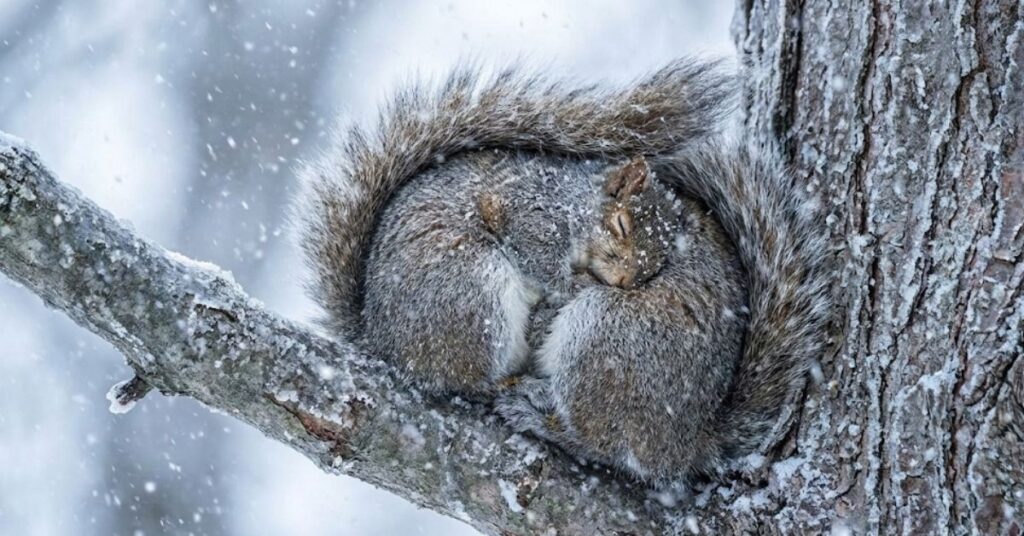
While they don’t sleep for months, they do use a trick called torpor. This is basically a short-term power-save mode. On a particularly brutal night in Minnesota or Ontario, a squirrel can drop its body temperature and metabolic rate so that it burns less fuel.
It’s like turning the thermostat down to 55 degrees in your house while you’re away. You aren’t “hibernating” your home, you’re just being cheap with the heating bill. Squirrels do this because they need to preserve every ounce of energy. According to researchers at the USDA Forest Service, maintaining body heat is the number one priority for small mammals during a polar vortex.
The Winter Wardrobe: It’s All About the Undercoat
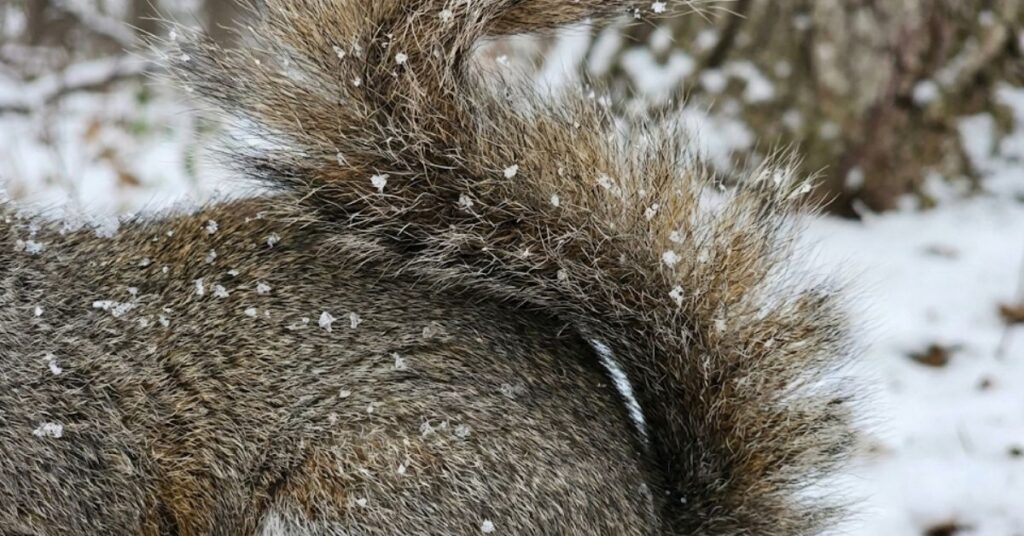
By the time January 2026 rolled around, your backyard squirrels had already swapped their summer outfits for heavy-duty parkas. They grow a dense, woolly undercoat that traps air near their skin.
This works exactly like the insulation in your attic. If you’ve been hearing weird noises up there lately, you might want to read my take on why your attic is banging at 5 AM. They love your insulation because it’s better than theirs. Their tails also act as a built-in blanket. They wrap that big, bushy tail around their bodies to keep the wind from stealing their warmth.
Comparison: Survival Strategies in the Backyard
| Creature | Strategy | Active in Jan? | Food Source |
| Gray Squirrel | Active / Torpor | Yes | Cached Nuts |
| Groundhog | True Hibernation | No | Body Fat |
| Black Bear | Deep Sleep | Mostly No | Body Fat |
| Raccoon | Dormancy | Occasionally | Scavenging |
Nest Sharing: A Survival Strategy
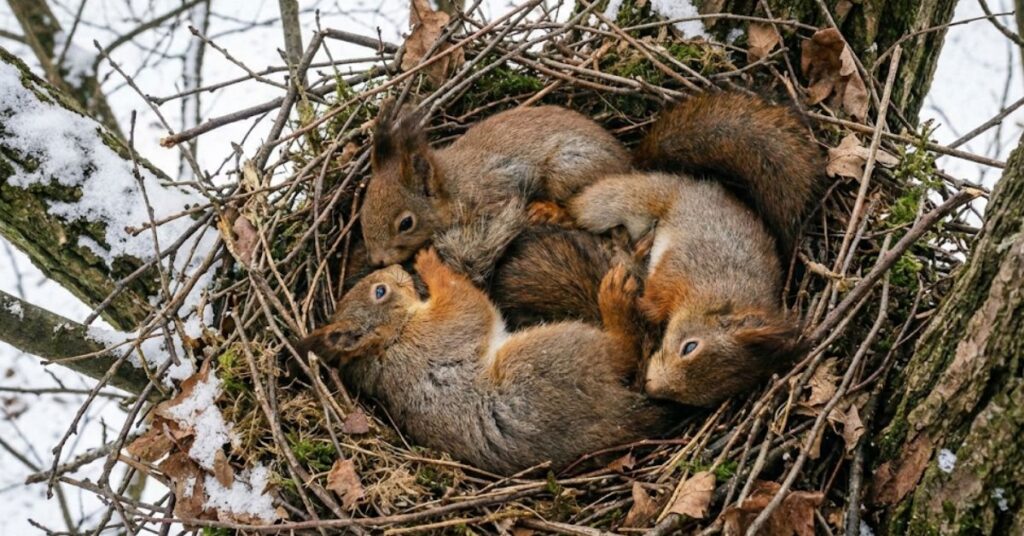
Squirrels are usually solitary, grumpy little jerks. They’ll fight over a single acorn like it’s the last piece of gold on earth. But when the temperature drops below zero, they suddenly become very friendly.
They will pile into a single drey (a nest made of twigs and leaves) or a tree cavity to share body heat. You might find five or six squirrels huddling together so that the group stays warm. It’s purely a business arrangement. As soon as the sun comes out, they go back to hating each other.
The Menu: The Nut Cache Mystery

How do they find food when there’s a foot of snow on the ground? They have a memory that puts mine to shame. They use “scatter hoarding.” They bury thousands of nuts across your yard in the fall.
They don’t remember every single hole. They use a combination of a highly developed spatial memory and their sense of smell. They can actually smell a buried walnut through a layer of snow and dirt because the nut is slightly decomposing and off-gassing.
Should You Feed Them? The Grumpy Verdict

I know you want to help. You see them shivering on the porch and you want to throw out a bag of stale crackers. Don’t do it. Most “human” snacks are junk food for wildlife.
If you absolutely must feed them, give them what they actually need: high-fat nuts like walnuts or sunflower seeds. But remember, once you start feeding them, they’ll stop looking for their hidden caches and start looking at your house as a grocery store. If they get too comfortable, they’ll find a way into your kitchen. If you end up with other pests because of the mess, you’ll be looking for my guide on how to get rid of fruit flies sooner than you think.
Winter Hazards for Your Home

While you’re worrying about them, they’re looking at your roof. Winter is when they are most likely to chew through your shingles. They can smell the heat leaking out of your vents, and they want in.
Check your eaves. If you see ice dams, you might also have squirrel damage. They love to chew on frozen wood because it helps file down their teeth. At hometoolcreatives.com, we see more roof damage in January than almost any other month.
Quick Answers (Because I Know You’ll Ask)
Do squirrels freeze to death? It happens. If a squirrel gets wet or can’t find shelter during a sudden drop in temperature, it can succumb to hypothermia. This is why dry nesting material is life or death.
What do they drink when everything is frozen? They eat snow. It’s not ideal because it lowers their body temperature, but it’s their main source of hydration when the ponds are solid.
Do they sleep more in winter? Yes. They might stay in their nests for 20 hours a day during a cold snap to conserve energy, only coming out during the warmest part of the afternoon.
Why do they wag their tails in the cold? It’s usually a signal to other squirrels. It can mean “stay away from my nut” or “there’s a hawk nearby.” It’s a high-energy movement, so they don’t do it unless they have a good reason.
The Bottom Line for Homeowners
Squirrels are the ultimate survivors. They aren’t sleeping; they’re just waiting for a break in the weather so they can go back to being backyard anarchists.
Don’t feel too bad for them. They’ve been surviving winters a lot longer than we’ve had central heating. Just make sure they’re surviving in the trees and not in your attic. If you want to see what else is making news in the world of home maintenance this winter, go check out our News category for the latest updates.
Now, go clear the snow off your own walkway and leave the squirrels to their nuts.
Related Post:
