

I spent my Tuesday evening watching my neighbor, Steve, try to wrestle a 20-foot inflatable movie screen in a light breeze. It looked like he was fighting a giant, nylon marshmallow. By the time he got it tethered, the wind shifted, and the whole thing did a slow-motion faceplant into his birdbath. It’s January 2026, and I’m grumpy because people are still falling for overpriced, flimsy gadgets when a trip to the hardware store and some common sense would serve them better.
If you’re in Florida or Texas, you’re probably enjoying “winter cinema” right now. If you’re up north in Maine or over in the UK, you’re likely planning for the spring thaw. Either way, you don’t need a corporate “bundle” to watch a film under the stars. You need a setup that doesn’t blow away, doesn’t lag, and doesn’t look like a blurry mess.
How do I set up a DIY outdoor movie night?
To set up a DIY outdoor movie night, you need a projector with at least 3,000 lumens, a flat white surface like blackout cloth or a PVC-frame screen, and a wired speaker. Arrange seating 10–15 feet away because this ensures optimal viewing angles so that the image stays crisp without visible pixels.

The Projector: Stop Obsessing Over “4K”
The marketing guys love to slap “4K” and “Cinematic” on every $100 plastic box from overseas. Ignore them. In the backyard, the only number that matters is lumens. Lumens are how we measure brightness. If your projector is weak, the moon or a neighbor’s porch light will wash out the screen, leaving you staring at a grey ghost.
You want at least 3,000 lumens for a decent image. I prefer LED projectors in 2026 because they run cooler and the bulbs last longer. We choose high-brightness units because ambient light is everywhere so that the movie actually looks like a movie and not a charcoal drawing.
The Screen: Don’t Use Your Bed Sheets
I’m going to be blunt: using a bedsheet is for college dorm rooms and people who don’t care about quality. Sheets are translucent. Half the light from your projector goes right through the fabric and hits the fence behind it. You lose half your brightness and all your contrast.
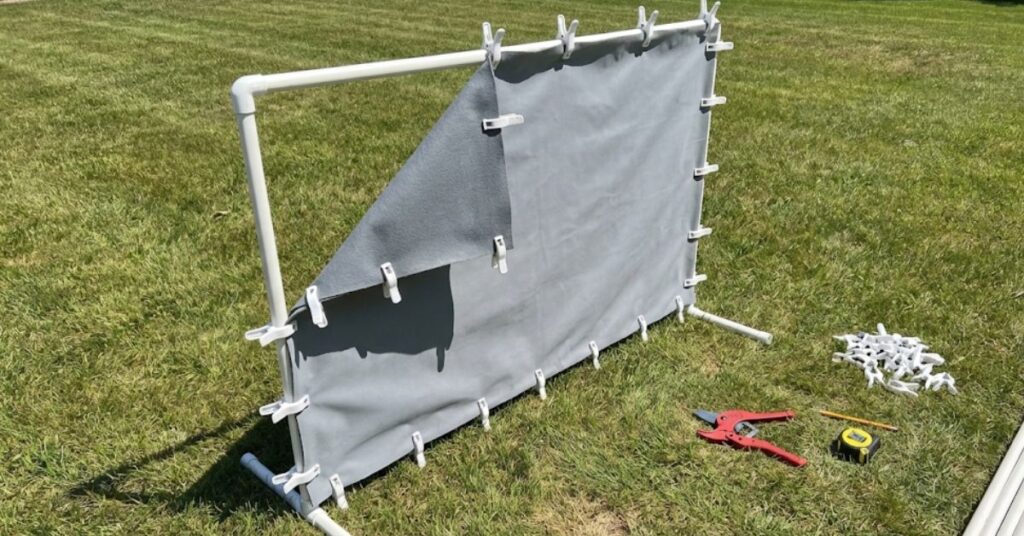
Instead, go buy some blackout cloth. It’s the heavy fabric used for curtain liners. It has a rubberized backing that blocks light. Stretch it over a simple frame made of 1-inch PVC pipe. We use PVC because it’s light and weather-resistant so that you can leave the frame out in the rain without it rotting like wood. If you want to see how to build a sturdy base for that frame, check out our tips on fire pit seating area ideas to see how to level your ground with gravel.
Outdoor Cinema Cost Comparison (2026 Estimates)
| Component | The “Corporate Fluff” Kit | The Grumpy DIY Way | Result |
| Projector | $600 (Fancy Brand) | $250 (High-Lumen Pro) | Same Brightness |
| Screen | $200 (Inflatable) | $45 (Blackout + PVC) | DIY is Sturdier |
| Audio | $150 (Brand Name BT) | $60 (Active PA Speaker) | DIY is Louder |
| Cabling | Included (Cheap) | $20 (Heavy Duty) | DIY is Safer |

Sound: Bluetooth Is Your Enemy
I love wireless tech as much as anyone, but Bluetooth has a dirty little secret: latency. There is often a split-second delay between the picture and the sound. Watching an action movie where the explosion happens before the “boom” is enough to make me throw my popcorn.
Stick to a physical AUX cable or an HDMI audio extractor. Run a wire to a single, powered PA speaker or an old guitar amp. We use wired connections because they eliminate lag so that the dialogue stays perfectly synced with the actors’ lips. If you’re worried about tripping over wires in the dark, you can use the same cord-management tricks we suggest in our Small Backyard Patio Ideas on a Budget guide.
Power and Safety: Don’t Burn the House Down
Extension cords are a trip hazard. I’ve seen movie nights end in a trip to the ER because someone ran a bright orange cord across a dark lawn. Use cord covers or bury them under an inch of mulch for the night.
Make sure your extension cord is rated for outdoor use. We check the gauge of the wire because projectors pull a decent amount of power so that the cord doesn’t overheat and melt your grass. If you’re doing a winter setup in Canada or Northern Europe, keep your electronics off the damp ground using a simple wooden crate or a plastic side table.
Dealing with the Uninvited Guests (Bugs)
If you’re doing this in the summer, you aren’t just hosting a movie; you’re hosting a mosquito buffet. The light from the projector is a beacon for every moth and mosquito in three counties.
Don’t use those stinky coils. Place a few plants that repel mosquitoes and flies around your seating area. A few pots of lavender or citronella geraniums can actually help. We place these near the fans because moving air also keeps mosquitoes from landing so that you can finish the movie without being eaten alive.
Rapid Q&A (Because I Know You’ll Ask)
1. Can I use a white wall instead of a screen?
Yes, if the wall is flat and painted with a matte finish. Avoid “glossy” white paint because it creates a “hot spot” where the light reflects directly into your eyes, ruining the image.
2. How do I get Netflix to work outside?
Most projectors have an HDMI port. Plug in a Roku, Fire Stick, or Apple TV. You’ll need a strong Wi-Fi signal. If your signal is weak, look at a Wi-Fi extender or run a long Ethernet cable.
3. What resolution is best for a 100-inch screen?
1080p is the sweet spot for a DIY setup. 720p looks a bit grainy at that size, and true 4K projectors are still too expensive and fragile for regular outdoor use.
4. Can I host a movie night in the rain?
No. Projectors have fans and vents. Even a light mist will get inside and short out the motherboard. If the clouds look threatening, pack it up.
5. How loud should the volume be?
Be a good neighbor. Keep the speakers pointed toward your house, not the neighbor’s bedroom window. Check your local noise ordinances in our News section—many US cities have a 10 PM “quiet hour” in 2026.
6. Do I need a special stand for the projector?
A sturdy card table or a heavy-duty tripod works fine. Avoid flimsy TV trays. If someone bumps the table, your movie will be projected into the neighbor’s tree.
The Grumpy Final Word
Look, an outdoor movie night should be about the movie and the people you’re with, not about how much money you spent at a tech boutique. Build your screen, wire your speakers, and keep the grass short (to keep the ticks in your yard away).
If you want to stay updated on the latest tool deals for your backyard projects or find out which projectors are actually worth the cash this year, keep an eye on our News category. I’m out here every week trying to keep you from wasting your money on marketing fluff.
Visit hometoolcreatives.com for more real talk on keeping your home from falling apart.
Related Post:
