

I spent my Saturday morning watching my neighbor try to set up a fire pit on a plastic rug. A plastic rug. It’s January 2026, and I thought we’d moved past the stage of human evolution where we put open flames on top of petroleum-based fabrics, but here we are. I’m grumpy because the “outdoor lifestyle” magazines keep showing you these high-end, $50,000 stone amphitheaters that look like they belong in a Roman ruin, not a backyard in Ohio.
Most of those glossy photos are junk. They show people sitting two inches away from a roaring blaze in white linen pants. In the real world, you have smoke, flying sparks, and that one friend who always tries to burn a pizza box. If you want a fire pit seating area that doesn’t result in a visit from the fire department or a backache, you have to plan for the “three S’s”: Safety, Spacing, and Smoke.
What is the best layout for a fire pit seating area?
The best fire pit seating area layout follows a circular design with a 7-to-10-foot “safety zone” around the pit. Place heavy, weather-resistant chairs at least 3 feet from the fire’s edge because this provides enough legroom for heat comfort so that guests can move without tripping.
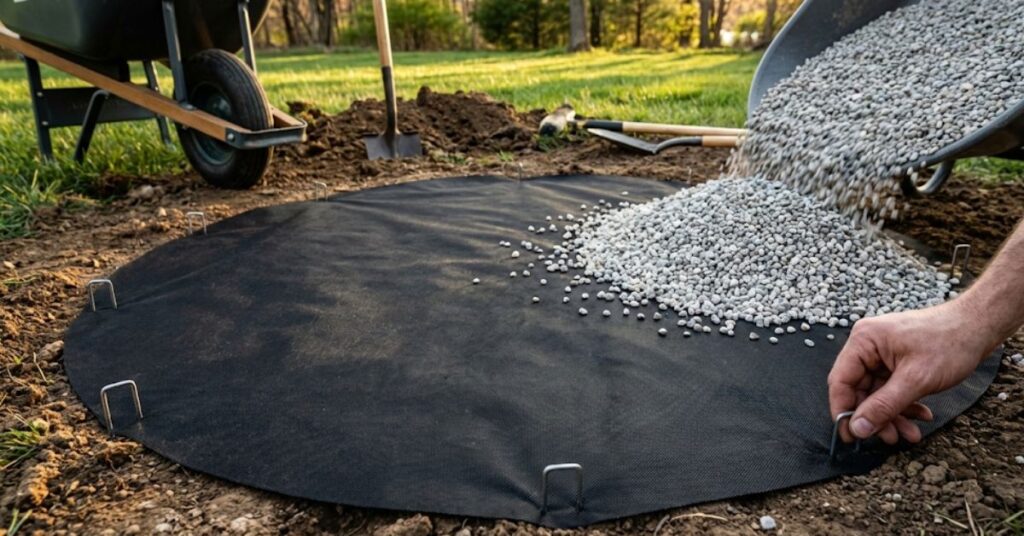
The Ground Rules: Stop Building on Mud
I shouldn’t have to say this, but please stop putting your fire pit directly on the grass. By March, you’ll have a circle of dead dirt that looks like a UFO landed in your yard. You need a proper base.
Loose-fill materials like pea gravel or crushed stone are the best for your wallet. They drain well and you don’t need a degree in masonry to level them. If you’re feeling fancy, you can use concrete pavers. If you need to figure out the cost of the base, you can use our Concrete Calculator to see what a poured pad might run you, though I usually stick to gravel so that the water has somewhere to go when the January slush melts.
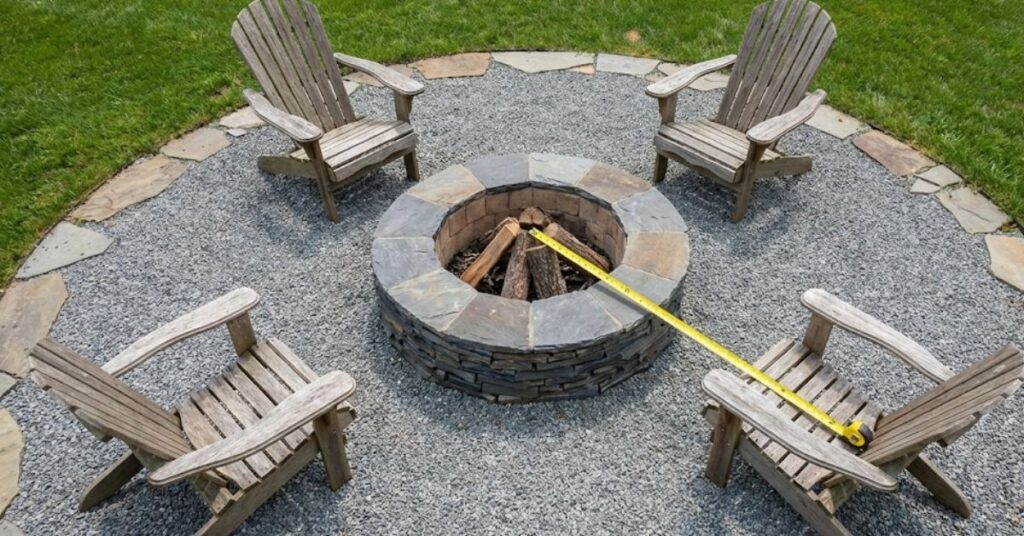
Spacing: The “Knee-Knocker” Prevention Plan
The biggest mistake I see—aside from the plastic rug—is people crowding the pit. You need room to breathe. A standard fire pit is about 3 feet wide. You need at least 3 feet of “heat space” before the chairs start. Then you need another 3 feet behind the chairs so that people can actually walk around without falling into someone’s lap.
If you don’t have a 12-to-15-foot diameter circle available, don’t buy a giant fire pit. Get a small one. Cramming a big pit into a small space is a recipe for scorched shins and ruined pants.
2026 Fire Pit Material Comparison
| Base Material | Estimated Cost (2026) | DIY Difficulty | The Grumpy Verdict |
| Pea Gravel | $2 – $4 per sq. ft. | Easy | My top pick. Cheap and works. |
| Concrete Pavers | $8 – $15 per sq. ft. | Medium | Looks good, but a lot of heavy lifting. |
| Decomposed Granite | $3 – $6 per sq. ft. | Easy | Hardens nicely, but can get messy. |
| Flagstone | $15 – $30 per sq. ft. | High | Overpriced marketing fluff for most yards. |

The Adirondack: The Only Chair That Matters
Don’t buy those flimsy folding chairs. A fire pit area needs weight. In 2026, we’re seeing a lot of “poly-lumber” Adirondack chairs. They’re made of recycled milk jugs, they weigh 50 pounds, and they won’t rot when it rains.
I like them because the slanted back puts your face further from the smoke while keeping your feet near the heat. It’s basic geometry. If you sit bolt upright, you’re just a giant chimney for the smoke to find.
Smoke Management: The 2026 “Smokeless” Trend
I’m usually the first to call out “tech” in the backyard, but the new secondary-combustion pits (the ones people call smokeless) actually work. They use a double-wall design to burn the smoke before it hits your eyes.
They are worth the extra fifty bucks so that you don’t spend the whole night playing “musical chairs” every time the wind shifts. I’ve lived through enough “rabbit-rabbit-white-rabbit” chanting to know that science is better than superstition when it comes to wood smoke. Check our News section for the latest recalls on cheap knock-off pits; some of the steel they’re using these days is about as thick as a soda can.
Safety Clearance: Don’t Melt Your Siding
The National Fire Protection Association (NFPA) suggests keeping any fire at least 10 to 25 feet away from structures and overhanging trees. I’ve seen siding warp from 15 feet away because someone decided to burn an entire pine tree at once.
If you’re building near a fence, check your local building codes. In 2026, many US counties are getting stricter about “permanent” fire features. We keep the pit away from the house because sparks fly, and I don’t want to explain to your insurance agent why the roof is on fire.
For those of you doing the math on the area you need to clear for a circular seating zone, you can use the standard area formula:
$$Area = \pi \times r^2$$
Where $r$ is the distance from the center of the pit to the back of your seating zone. If that number is bigger than your yard, start over.
Quick Answers (Because I Know You’ll Ask)
1. How far should seating be from a fire pit?
You want at least 30 to 36 inches between the edge of the fire pit and your chairs. This keeps your legs from roasting while giving you enough room to stand up without tripping over the pit.
2. What is the best stone for around a fire pit?
Pea gravel or crushed river rock is the best. Avoid using porous stones like sandstone or wet river rocks inside or touching the fire, as they can trap moisture and literally explode when heated.
3. Can I put a fire pit on a wooden deck?
Only if you hate your house. If you absolutely must, you need a heavy-duty fire mat and a spark screen, and even then, I wouldn’t do it. Stick to the ground where the dirt doesn’t burn.
4. How much space do I need for 4 people around a fire pit?
You need a circle at least 12 feet in diameter. This accounts for a 3-foot pit, 3 feet of legroom on both sides, and space for the chairs themselves.
5. What is the cheapest fire pit seating?
Log stumps. If you can find a local tree service, they’ll often give you rounds of oak or maple for free. Sand the top, hit it with a little sealer, and you’ve got seating that won’t blow away in a storm.
6. Are propane fire pits better than wood?
Propane is cleaner and better for small patios or areas with frequent burn bans. Wood is better for the smell and the heat. If you’re lazy (like I am on Mondays), propane is a dream because there’s no ash to clean up.
7. How do I stop smoke from blowing in my face?
Buy a smokeless fire pit or only burn extremely dry, seasoned hardwood. Wet wood is the primary cause of “the crying gardener” syndrome.
Final Thoughts from the Fire Ring
Look, a fire pit is supposed to be relaxing. If you’re stressing over whether your pavers match your house’s shutters, you’re missing the point. Dig a hole, put some gravel down, and buy a few heavy chairs.
We build these areas because we want a place to escape the screens and the noise so that we can actually talk to our families. If you want to keep up with the latest in 2026 outdoor tool reviews or see if the price of lumber is finally dropping, keep an eye on our News category.
Visit hometoolcreatives.com for more real-world advice that doesn’t treat you like you’re made of money.
Related Post:
