

If I see one more “perfect” backyard influencer photo while my own backyard looks like the set of a swamp horror movie, I might just throw my coffee at the screen. It is January 18, 2026, and if you live anywhere near the Great Lakes or the Midwest, you aren’t looking at “vibrant” gardens—you’re looking at a slurry of mud and sadness.
Current weather models for this month are as volatile as a wet cat, with Arctic blasts and “winter storminess” keeping the ground from freezing solid. When the ground doesn’t freeze, it stays saturated. When it stays saturated, your dog brings half the lawn into your kitchen on its paws.
You don’t need “curated backyard vibes.” You need backyard drainage ideas that actually work so you can stop trudging through the muck. Let’s look at how to fix a muddy yard before you sink any deeper.
The Quick Fix: How Do I Stop the Mud Right Now?
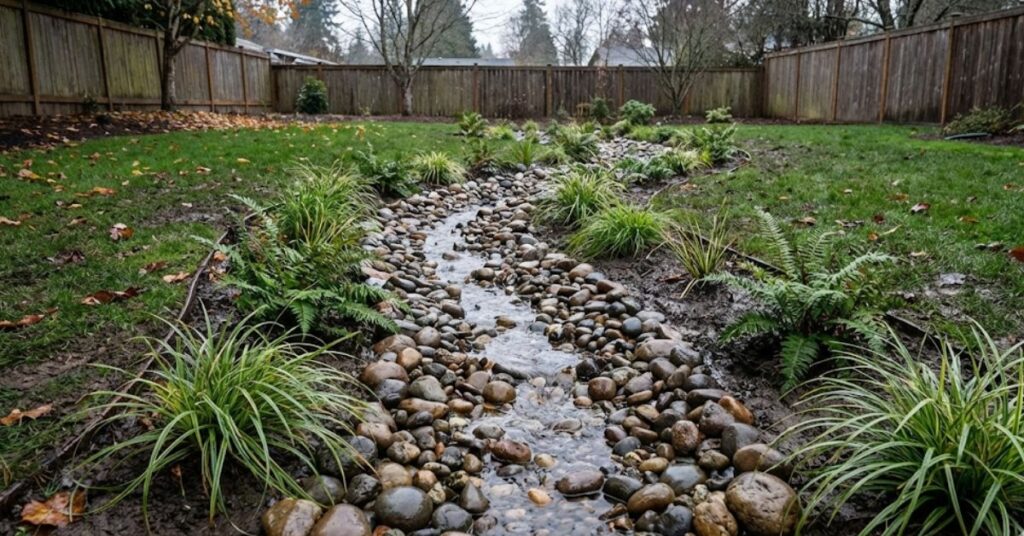
The most effective way to fix a muddy yard is to redirect water at its source by extending downspouts and aerating compacted soil to improve absorption. For chronic standing water, installing a French drain or a rain garden at least 10 feet from your foundation will move water away and allow it to soak into the ground naturally.
Stop the Waterfall: Check Your Downspouts
Before you go digging up the whole neighborhood, look at your roof. Your gutters collect a massive amount of water, and if your downspouts are dumping it right at the base of your house, you’re just manufacturing mud.
Improperly placed downspouts are one of the biggest causes of poor drainage. The easiest fix is to attach accordion-type extensions to your existing downspouts. These let you divert that mini-river toward an area of the lawn that can actually handle it, or even into a rain barrel if you want to be smart about it.
The Compaction Problem (It’s Your Feet)
If your yard is muddy only where you walk, you have compacted soil. When you walk on wet dirt, you squeeze the pore space between the soil particles. Now, water can’t penetrate, so it pools on top.
- Aerate the Soil: Poke holes in the ground using a garden fork or a spike aerator. This lets air and water actually reach the roots rather than just sitting on the surface.
- Add Organic Matter: Mixing compost into your soil can boost its quality and its ability to absorb water.
The Heavy Hitters: French Drains and Swales
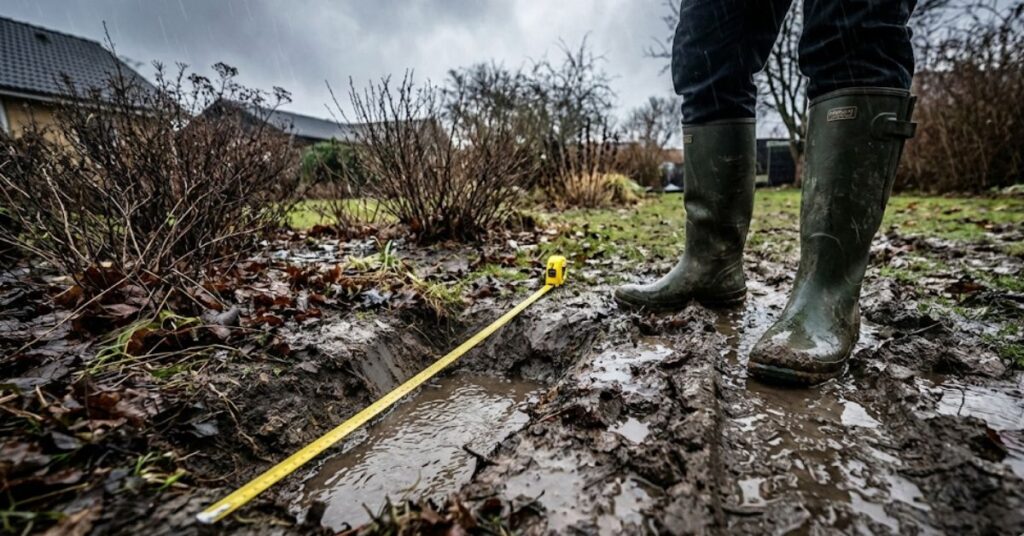
Sometimes, a few holes in the ground aren’t enough. If your yard is flat or slopes toward your house, you need a system.
The French Drain
This is the gold standard for moving underground water. It’s essentially a gravel-filled trench with a perforated pipe inside. Water seeps into the gravel, enters the pipe, and flows away via gravity.
| Feature | Specification |
| Typical Depth | 18 to 24 inches for residential yards |
| Trench Width | 6 inches for small problems; up to 18 inches for large ones |
| Minimum Slope | At least 1% (1 inch of drop for every 8 feet of length) |
| Backfill Material | Washed gravel or crushed stone (prevents clogging) |
Swales and Creek Beds
A swale is a fancy word for a shallow drainage ditch that follows the natural slope of your yard. If you want it to look like a “feature” instead of a ditch, fill it with river rocks and pebbles to create a dry creek bed. It works like a slide for runoff during a storm but looks like landscaping when it’s dry.
Build a Rain Garden (Stop Fighting the Water)
If you have a low spot that always collects water, stop trying to grow grass there—you’re losing that battle. Instead, dig a shallow depression and turn it into a rain garden.
The idea is to capture rainwater close to where it falls. You plant water-loving native species—like lady ferns or sedges—that appreciate “wet feet” and help filter the water as it soaks back into the earth. Just make sure it’s at least 10 feet away from your foundation so you aren’t just inviting water into your basement.
Quick Answers (Because I Know You’ll Ask)
Why is my backyard so muddy after rain?
Your soil is likely compacted or has a high clay content, which prevents water from sinking in. If your yard is flat, the water has nowhere to go but up into your boots.
Can I just put sand on my muddy yard?
Don’t do it. Mixing sand into clay soil without the right organic matter can actually create a texture similar to concrete. Stick to aerating and adding compost.
Is a French drain expensive to install?
If you do it yourself, it’s just the cost of gravel, pipe, and a lot of sweat. Professionally, you’re looking at $10 to $100 per linear foot, which adds up fast.
Will mulch help a muddy yard?
Yes, a layer of wood chips or straw can act as a shield, absorbing moisture and preventing direct rain impact from washing away your soil.
How do I know if I have a drainage problem or a leak?
If the water is still there 48 hours after the rain stops, you have a drainage issue. If it never goes away, call someone to check for a broken utility pipe.
Should I hire a professional for drainage?
If you have water entering your basement or pooling near your foundation, don’t mess around—call a pro. For small soggy spots, a weekend of digging is usually enough.
What are “bioswales”?
Think of them as rain gardens that are also drainage channels. They use plants and decorative rocks to slow down and filter water as it moves.
Get Out of the Muck
Look, nobody likes a yard they can’t use without a pair of hip waders. Start small—extend those downspouts today. If you’re still sinking tomorrow, start looking at where the slope of your yard is betraying you.
Check our latest News section to see if the 2026 spring forecast is going to be as wet as predicted—spoiler alert: it’s looking like a soggy one. You’ve got a window before the heavy spring rains hit, so use it.
For more real-world advice on keeping your house from floating away, stick with us at Home Tool Creatives. Now, go wash your boots.
Related Posts:
