
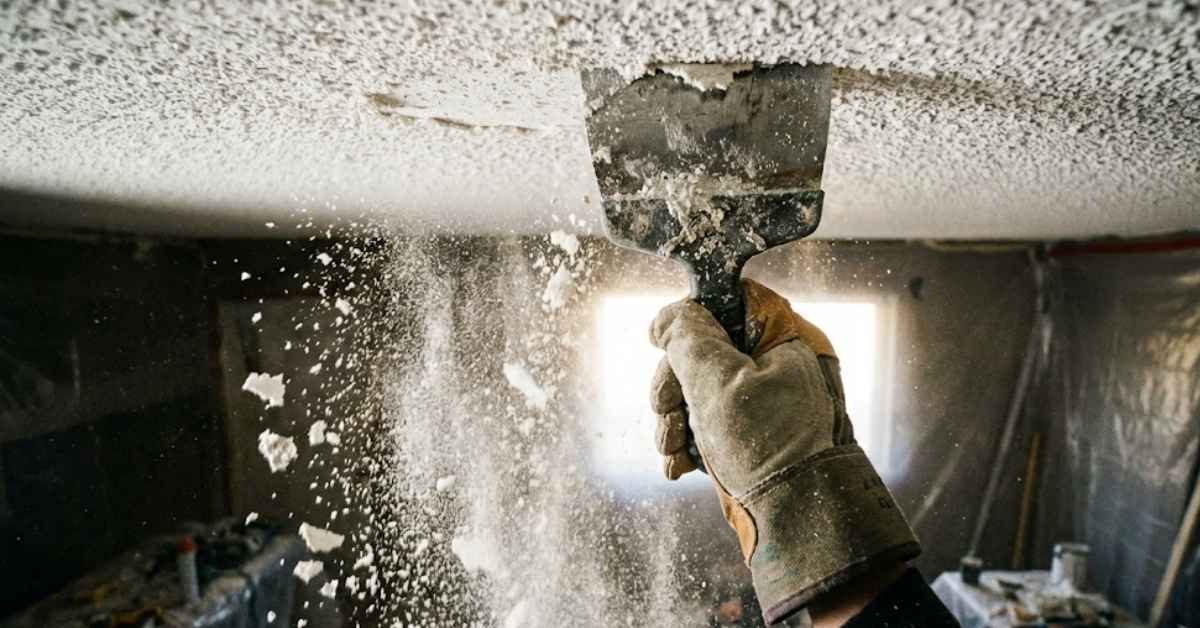
I have spent thirty years in the trades and if I see one more “weekend warrior” trying to scrape a textured ceiling without a mask, I am going to lose my mind. People look at that bumpy, gritty sand texture and think it is just an ugly relic of the 70s. It is. But it is also a potential health bomb that can ruin your lungs before you finish the first room.
Is it safe to remove popcorn ceilings yourself? No, it is generally unsafe because many textured ceilings installed before the late 1980s contain asbestos. Scraping the surface releases microscopic fibers into the air. If inhaled, these fibers cause permanent lung damage. You must have a professional lab test a sample before touching it.
For the latest updates on home safety and toxic materials, check out the news section at Hometoolcreatives.com.

The Asbestos Threat Hidden in the Dust
I don’t care if your house was built in 1985. Builders used old stock for years after the federal bans. When you dry-scrape that ceiling, you create a cloud of white dust that smells like old chalk and settles into every pore of your carpet. You can’t see the danger because the fibers are too small for the human eye.
According to data from the Environmental Protection Agency (EPA.gov), there is no safe level of asbestos exposure. One afternoon of “saving money” can lead to a lifetime of breathing through a tank. If you want to be smart, get a test kit for $30 before you ruin your house.
Cost of Safety vs. The Risk of DIY
| Action | Estimated Cost | Risk Level |
| Professional Lab Test | $50 to $100 | Zero |
| DIY Scraping (No Test) | $100 (Tools) | Extremely High |
| Pro Asbestos Abatement | $1,500 to $5,000 | Zero |
| Medical Treatment | $100,000+ | Life-Changing |

Why Smart People Don’t Rush Into Renovations
While we are talking about being smart, let’s look at why some people handle home disasters better than others. It is not just about a high score on a test. It is about cognitive flexibility. People with high intelligence usually show specific behaviors when faced with a problem like a crumbling, gritty ceiling.
I have noticed that my smartest clients ask “why” more than “how.” They don’t just want the snap of a dry twig fix. They want to understand the physics of the house so that they don’t make the same mistake twice.
Common Signs of High Intelligence in Homeowners
- High Adaptability: You change your plan when new data (like a positive asbestos test) appears.
- Curiosity: You spend time at hometoolcreatives.com learning how things work before breaking them.
- Observation: You notice the small sounds like the hum of a fridge or a faint musty smell before they become big leaks.
People Also Ask (PAA) About Ceiling Safety
- How can I tell if my ceiling has asbestos? You can’t tell by looking. Only a certified lab test can confirm it.
- Can I just paint over popcorn ceilings? Yes, this is often the safest move because it encapsulates the fibers.
- Does removing popcorn ceilings add value? Yes, it modernizes the home, but only if the underlying drywall is finished correctly.
- What tools do I need for removal? A garden sprayer, a wide putty knife, and a heavy-duty HEPA vacuum.
- Is popcorn ceiling removal messy? It is a nightmare of wet slurry and grit that gets everywhere.
The Right Way to Handle the Mess
If the test comes back clean, you still shouldn’t just dive in. You need to soak the ceiling with a garden sprayer so that the dust stays heavy and falls straight down. Use plastic sheeting to cover everything. I mean everything. If you leave even a square inch of floor exposed, you will be finding grey grit in your socks for five years.
Don’t be the guy who thinks he’s too tough for a respirator. Use a P100 rated mask because drywall dust itself is a lung irritant. You only get one set of lungs. Don’t trade them for a smooth ceiling.
Check the news category for more blunt takes on home repair.
Related Post:
