
Let’s be honest. You probably bought that colorful moon cactus grafted on a green stem because it looked cool at the store. Now it’s sitting on your shelf and you’re wondering why it looks a bit sad. Or maybe you want to try growing cactus from seed but you’re afraid you’ll just end up with a pot of wet dirt. I’ve spent twenty years digging in the sand and I can tell you that cacti aren’t just “desert plants” you can ignore. They have personalities.
This guide will show you how to handle everything from a purple prickly pear cactus to germinating cactus seeds like a pro. We’ll talk about cactus watering, how to keep a variegated moon cactus alive, and why your moonlight cactus plants might be struggling.
How do you take care of a moon cactus and prickly pears?
To care for these plants, provide bright indirect light and use well-draining soil. Only water when the soil is completely dry. For a moon cactus grafted, avoid getting water on the graft joint. Cactus watering should happen every 2 weeks in summer and once a month in winter.
The Spotlight: Moonlight Cactus and Purple Prickly Pear

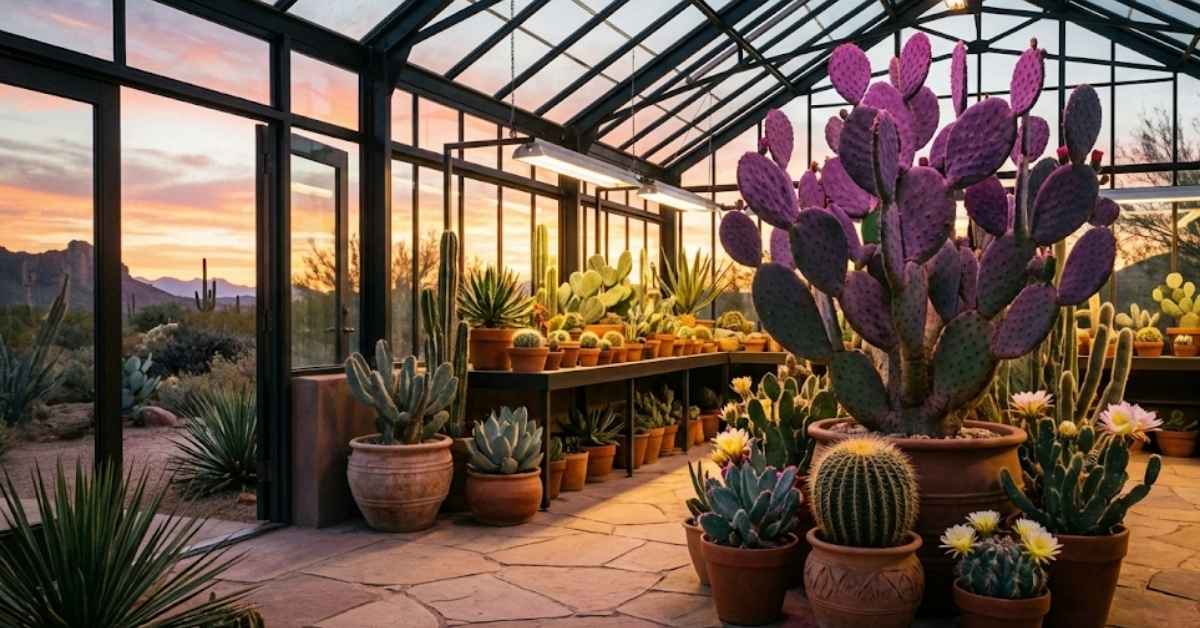
If you want a garden that makes neighbors stop and stare, you need the purple prickly pear cactus. Specifically, the Santa Rita purple prickly pear cactus is a showstopper. It turns a deep violet color when it gets a bit cold or stressed. It’s not a “sick” plant; it’s just showing off.
On the other hand, moonlight cactus plants (often confused with the Epiphyllum species) bloom at night. They have these massive, ghost-white flowers that smell like heaven. If you prefer something smaller for your desk, a small purple cactus or a purple cactus plant can brighten up a room without taking over your life.
Popular Cacti Varieties and Features
| Cactus Variety | Common Feature | Light Need |
| Purple opuntia cactus | Vibrant purple pads | Full Sun |
| Yellow moon cactus | Bright neon top | Indirect Bright Light |
| Hurricane cactus | Spiraling stems | Bright Light |
| Living rock cactus plant | Mimics stones | Full Sun |
| Cruciforme cactus | Geometric branching | Bright Light |
Growing Cactus From Seed: A Test of Patience

Most people just buy a live moon cactus, but there is something special about growing a cactus from seed. I’ll tell you right now: it is slow. If you want instant results, go buy a plastic plant. But if you want to see the life cycle of prickly pear cactus from the very start, you need to learn how to plant cactus seeds.
How to Plant a Cactus Seed Successfully
First, you need the right soil. Don’t use that heavy stuff from your backyard. You need a gritty mix so that the cactus seedling doesn’t drown. You can use our raised bed soil calculator to figure out how much mix you need for your seed trays.
- Preparation: Get your cactus seeds growing in a shallow container.
- Sowing: How do you plant cactus seeds? Just press them into the surface. Don’t bury them deep because they need a little light to wake up.
- Moisture: Use a spray bottle for watering cactus at this stage so you don’t wash the tiny seeds away.
- Heat: Cactus seeds germination works best when the soil is around 75°F.
When sprouting cactus seeds, I use a clear plastic lid to keep the humidity high. How to sprout cactus seeds is all about balance. Too dry and they die; too wet and they turn into moon cactus stem rot before they even start. Once you see the germinated cactus seeds, they look like tiny green pearls. That is the cactus seedlings stage where you have to be most careful.
Moon Cactus Grafting: The Science of Survival

A moon cactus grafted is actually two plants in one. The colorful top (Gymnocalycium mihanovichii) cannot live on its own because it has no chlorophyll. It’s a parasite. It survives because it is joined to a green base that does all the hard work.
If you see a moon cactus yellow or a moon cactus pink, remember that the grafted moon cactus lifespan is usually only a few years. Eventually, the base gets tired or the top grows too big. You might see moon cactus sprouting from the sides of the green stem. I usually cut those off so that the energy stays with the colorful head.
Moon Cactus Care Tips
- How big do moon cactus get? They usually stay small, around 4 to 5 inches.
- How big can a moon cactus grow? If you have a large moon cactus, it might reach 6 inches, but that’s rare.
- Yellow moon cactus and purple moon cactus need the same care: keep them out of direct, scorching sun so that the colored top doesn’t burn.
Watering Cacti: The “Don’t Kill It” Schedule

The biggest mistake I see? People watering cactus like they are watering a fern. Stop it. How often should cactus be watered? It depends on the season. In February 2026, many parts of the USA are still cold. Watering cactus plants in winter should be very rare.
The Ultimate Cactus Watering Schedule
| Season | Frequency | Instructions |
| Summer | Every 10-14 days | Soak the soil completely |
| Spring/Fall | Every 21 days | Check soil depth with a finger |
| Winter | Every 40-60 days | Only if the plant looks wrinkled |
How often should cactus plants be watered if they are indoors? Probably once a month. If you have an overwatered prickly pear cactus, the pads will look bloated and mushy. An underwatered prickly pear cactus will look thin and wrinkled like a sad prune.
If you’re building a custom planter for your purple prickly pear cactus plant, you might need some concrete work. Check our concrete calculator to get the base right so that your heavy pots don’t sink into the dirt.
Advanced Cacti: Ariocarpus and Living Rocks

If you’ve already figured out how to care for moon cactus, you might want to try something harder. The ariocarpus cactus (or cactus ariocarpus) is often called a “living rock.” It grows so slowly you might think it’s a literal stone. These are expensive, and finding a living rock cactus for sale is a treat for any collector.
Germinating cactus for these species is even harder. You need to understand cactus germination triggers. These plants love a very mineral-heavy soil with almost no organic matter. How to germinate cactus seeds for Ariocarpus involves very high heat and a lot of luck.
Troubleshooting: Why Is My Cactus Dying?

I’ve seen a moon cactus fully grown just collapse overnight. Usually, it’s moon cactus stem rot. If the base of your grafted moon cactus feels squishy, it’s probably game over.
- Pests: Look out for mealybugs. They look like tiny bits of white cotton.
- Light: A cactus with colored top needs light, but not a heat lamp. If it turns brown, it’s sunburned.
- Stretching: If your cactus growing from seed looks tall and skinny, it’s “stretching” for light. Move it closer to a window.
If you are planting nopal cactus outside, make sure you don’t have standing water. You can check your yard’s drainage or even use our pool volume calculator if you are designing a water feature nearby to ensure the runoff doesn’t drown your purple flowering cactus.
Conclusion: Becoming a Cactus Pro
Growing a moon cactus yellow or a purple prickly pear cactus is all about knowing when to walk away. These plants thrive on neglect. Whether you are growing cactus from seed or just trying to keep a live moon cactus on your desk, the rules are the same: gritty soil, bright light, and very little water.
You can grow cactus from seed and watch the prickly pear cactus growth stages over the years. It’s a slow hobby, but it’s a rewarding one. Just don’t forget to wear gloves. Those purple cactus plants have a way of biting back.
Frequently Asked Questions
1. How often should a cactus be watered?
Only water when the soil is bone-dry. In summer, this is usually every 2 weeks. In winter, it might be once every two months.
2. Can you grow a cactus from a seed?
Yes, growing a cactus from seed is possible but requires a humidity dome and consistent warmth. How to grow a cactus from seed involves patience as they grow very slowly.
3. How big do moon cactus get?
Most moon cactus grafted plants stay under 5 or 6 inches tall.
4. Why is my moon cactus pink top falling off?
The graft has likely failed. This happens naturally after a few years or if the plant has been overwatered.
5. What is a Santa Rita purple prickly pear cactus?
It is a species of Opuntia that turns deep purple in response to cold weather or drought stress.
6. How to care for moon cactus in winter?
Keep it in a cool, bright spot and almost stop watering entirely until spring.
7. How often do cactus need watering if they are in a window?
Check the soil. If the sun is hitting it, it might need water every 3 weeks. Always do the finger test.
8. What is the prickly pear cactus growth rate?
They are relatively fast for cacti, often adding several new pads in a single growing season.
9. How to start cactus seeds indoors?
Use a sterile cactus mix, keep the container covered to maintain humidity, and place it in a warm, bright area.
10. Can I find living rock cactus for sale easily?
No, Ariocarpus is rare and often sold by specialty nurseries because it grows so slowly.
11. What causes moon cactus stem rot?
Usually, it is caused by water sitting in the soil for too long or high humidity without airflow.
12. Does a moon cactus flowering happen often?
It can happen in summer if the plant is happy, usually producing small pink or white flowers.
13. How to care for a moon cactus with a yellow top?
Provide bright, filtered light. Avoid direct midday sun which can bleach the yellow color.
14. What are prickly pear cactus care indoors requirements?
They need the sunniest window you have, ideally south-facing, and very sandy soil.
15. How do you grow cactus from seed successfully?
Keep the temperature steady and don’t let the cactus seedling dry out completely in its first few months.
16. What is a variegated moon cactus?
It is a moon cactus that has multiple colors, like red and yellow mixed, on the same top.
17. How often should cactus plants be watered in Arizona?
Outdoors, they may need water every week in the 110-degree summer. Indoors, it remains every 2-3 weeks.
18. Is moon cactus yellow a different species?
No, it is just a different color mutation of the same Gymnocalycium mihanovichii.
19. What is a hurricane cactus?
It is a common name for the twisted or spiral variety of Cereus or similar columnar cacti.
20. How to sprout cactus seeds faster?
Use a heat mat under your seed tray to keep the soil at a constant 75-80°F.
Related Post:
