
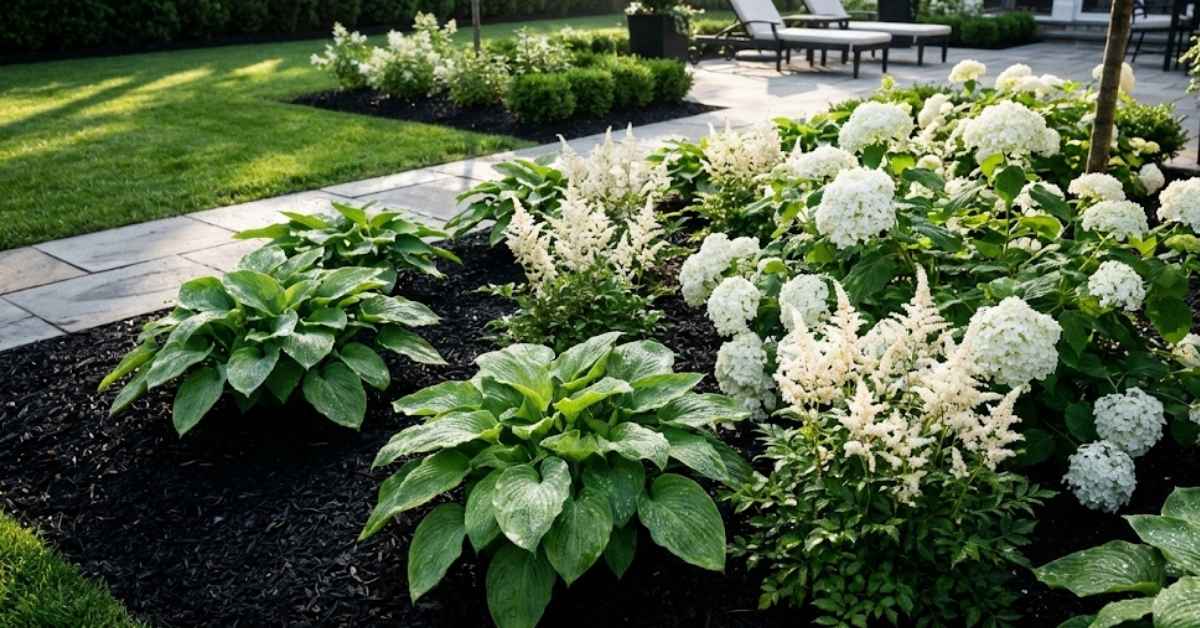
You want that sleek, professional look for your flower beds. I get it. Nothing makes green foliage pop like a crisp layer of midnight-dark wood. But before you go hauling twenty bags of black dyed mulch from the garden center, we need to talk. I’ve spent two decades in the dirt, and I’ve seen black mulch in a garden go from “Pinterest perfect” to “slimy disaster” in a single rainy week.
You’re likely worried about the chemicals, the fading, or that weird black mold slime that looks like a dog vomited on your petunias. I’ll show you exactly how is black mulch made, whether is black mulch toxic, and how to stop black garden wood chips from ruining your curb appeal.
Is black mulch bad for plants?
Black dyed mulch is generally safe for plants if it is carbon-based or vegetable-dyed. However, it can absorb excessive heat in summer, potentially stressing shallow roots. Issues like black mulch mold or black slime on soil often result from overwatering or poor drainage rather than the dye itself.
What Is Black Mulch Made Of and How Do They Dye It?

Let’s start with the basics because people ask me all the time, “what makes black mulch black?” Most black garden wood chips start as recycled wood. This could be old pallets, construction debris, or scrapped timber. To get that deep color, manufacturers use a mulch black dye.
Usually, the black dye mulch consists of carbon black. Carbon black is basically just charred organic matter. It’s the same stuff used in ink and tires. Some people worry about what is in black mulch dyed with, but most reputable brands (like nature scapes black mulch) use vegetable-based or mineral dyes.
The Breakdown: What’s Inside Your Bag?
| Feature | Details |
| Primary Material | Hardwood, cedar, or recycled wood pallets |
| Coloring Agent | Carbon black or charcoal-based mulch black dye |
| Longevity | Does black mulch fade? Yes, usually within 12 months |
| Safety | Generally non-toxic if labeled carbon-based |
I’ve seen some cheap stuff out there where the dye mulch black process uses chemicals that smell like a tire fire. If it smells like a chemical plant, don’t put it in your black mulch flower beds.
Pros and Cons of Black Mulch
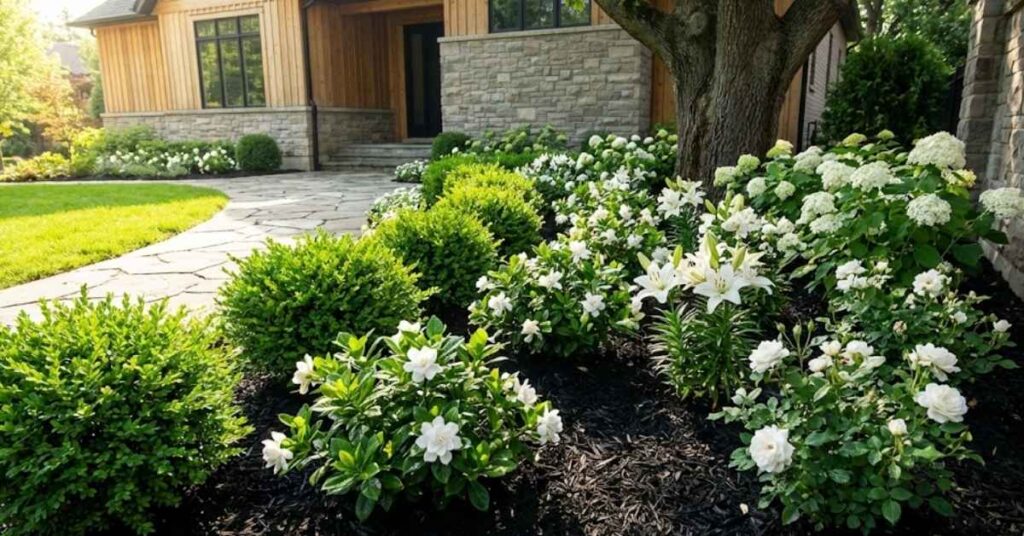
Choosing between black mulch or brown is usually about aesthetics. But there are functional differences you need to know.
The Good (Pros)
- Visual Pop: It makes light-colored plants look incredible.
- Heat Retention: In early spring, it warms the soil. This is great for jump-starting growth in cooler climates like the Northeast.
- Weed Suppression: Like any good best black mulch for garden beds, it blocks light so weeds can’t germinate.
The Bad (Cons)
- Heat Stress: During a Texas summer, that dark black mulch gets hot. It can bake the roots of an overwatered black eyed susan.
- Staining: If you get black dye mulch on your white driveway, good luck. It’s like a permanent tattoo for concrete.
- Fungus Magnet: Because it stays warm and damp, you might see black yard fungus or black pearl slime mold.
The Fungus Among Us: Identifying Black Mulch Mold
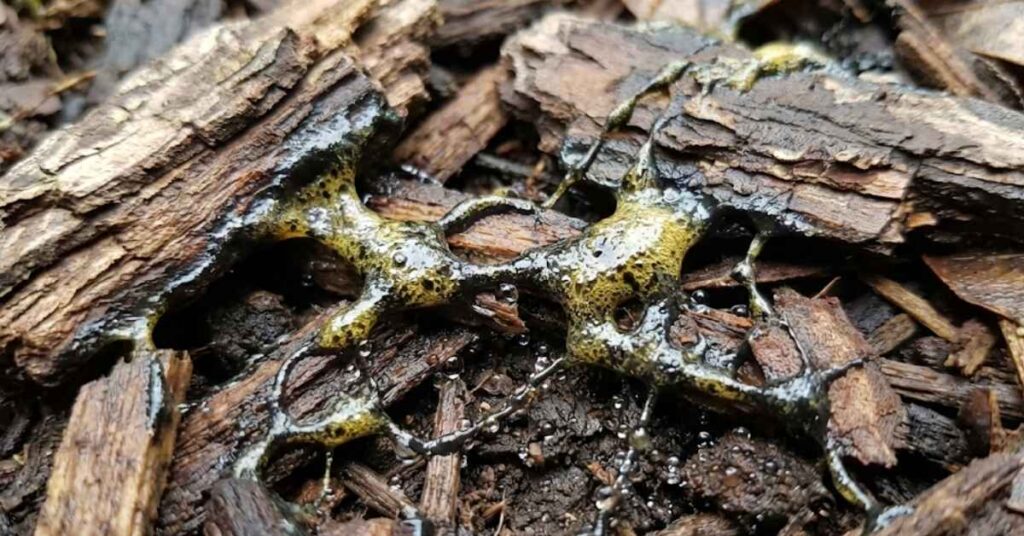
If you see black slime on soil or a black lawn mold, don’t panic. You aren’t being invaded by aliens. This is often black slime mold in lawn or garden areas, sometimes called “dog vomit” mold. It’s not actually a mold; it’s a protist.
Common Garden Fungi and Pests
- Black Slime Mold: A sticky, gooey black pearl slime mold that eventually dries into a crust.
- Black Sooty Mold: If you see black sooty mould on plants or want to know how to treat black sooty mold on trees, check for aphids. They poop “honeydew,” and the black mold tree fungus grows on that sticky mess.
- Black Spot Lawn: Small black spots on grass blades or black and brown mulch mixed with yellowing grass usually point to a fungal infection like leaf spot.
- Black Powdery Fungus on Grass: This is often a sign of poor drainage or high nitrogen.
If you find tiny black eggs on grass blades, those are likely artillery fungus spores or small pest eggs. They aren’t harmful to you, but they are a pain to scrub off your siding.
Is Black Mulch Bad for Plants and Soil?

I get this question at every backyard BBQ. Is black mulch bad? Not inherently. But is black mulch toxic? That depends on the source.
If the black velvet mulch is made from recycled pallets that were treated with Chromated Copper Arsenate (CCA), it’s bad news. Thankfully, the USA banned CCA for residential use years ago. Most top rated black mulch brands are now safe. However, always look for the “MSC” (Mulch & Soil Council) certification on the bag to be sure.
The Heat Factor
Does black mulch attract bugs? No more than any other wood product. But it does attract heat. If you are planting something delicate, like black mission vs brown turkey figs, remember that the black mission vs brown turkey figs debate often involves cold hardiness. Black mission figs love heat, while brown turkey vs black mission figs comparisons show Brown Turkeys handle cold better. A layer of black mulch might help a fig tree in a cold zone, but it could cook a delicate fern in Florida.
How to Treat Lawn and Mulch Fungi
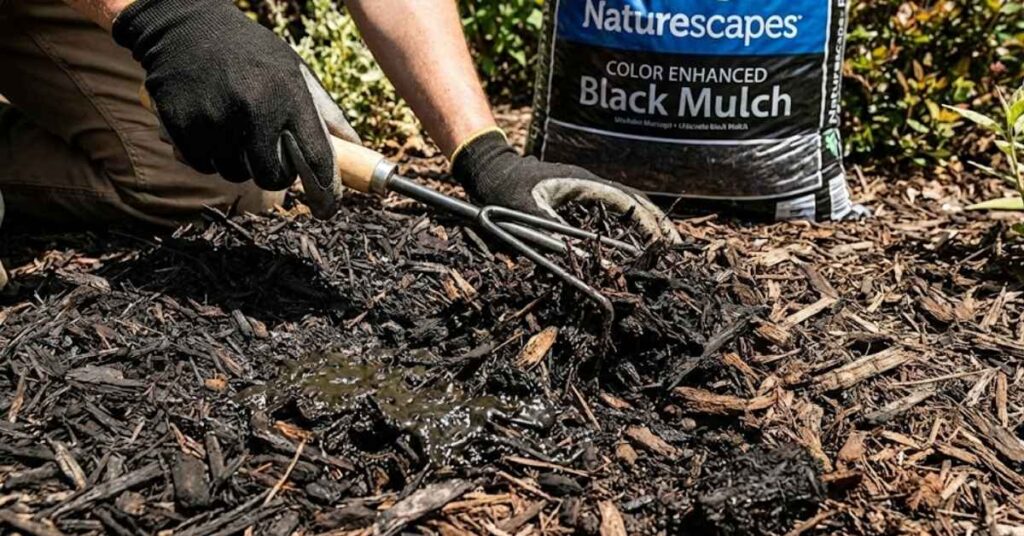
If you wake up to lawn black patches or black fungus growing on ground, here is your battle plan:
- Rake it out: For black slime mold in lawn, just rake the mulch. It breaks up the colony and lets it dry out.
- Check the water: Black lawn mold and black fungus lawn thrive in wet spots. Use our pool volume calculator to see if your drainage is dumping too much water in one area (or just use common sense and look at your downspouts).
- Vinegar Spray: A light mix of water and vinegar can kill black yard fungus without harming your perennials.
- Air it out: If you have black and brown mulch mixed together and it smells sour, it’s gone anaerobic. Flip it with a pitchfork.
Comparing Mulch Types: Black Mulch vs Dark Brown
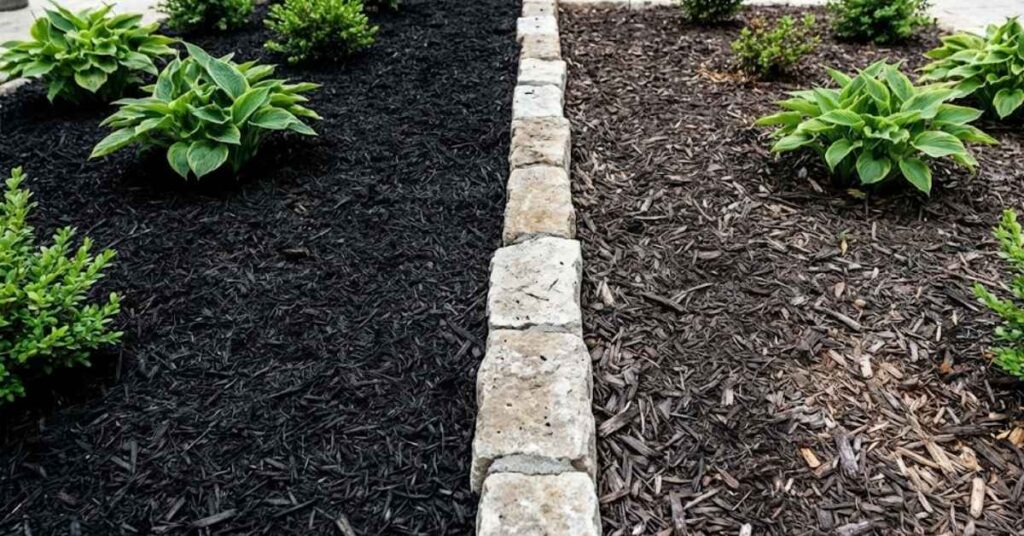
A lot of people ask me, “black mulch vs dark brown, which is better?”
Dark brown looks more “natural,” like forest floor debris. Triple black mulch or extra fine black mulch looks like a landscape designer just left. The black mulch prices are usually similar, but dyed black mulch tends to hold its color slightly longer than brown before it turns gray.
Mulch Price and Performance Comparison
| Mulch Type | Price per Yard | Fade Rate | Best Use |
| Black Dyed Mulch | $35 – $50 | 12 Months | Modern homes, Contrast |
| Hardwood Black Mulch | $40 – $55 | 10 Months | High-end gardens |
| Texas Native Black Mulch | $30 – $45 | 8 Months | Local hardy landscaping |
| Black Velvet Mulch | $6 (Bagged) | 12 Months | Flower beds, Small areas |
If you are trying to figure out how many bags you need for those black mulch beds, use our mulch calculator. Don’t guess. I’ve seen too many people buy 40 bags and only need 15. Your lower back will thank me.
Pests: Does Black Mulch Attract Termites?
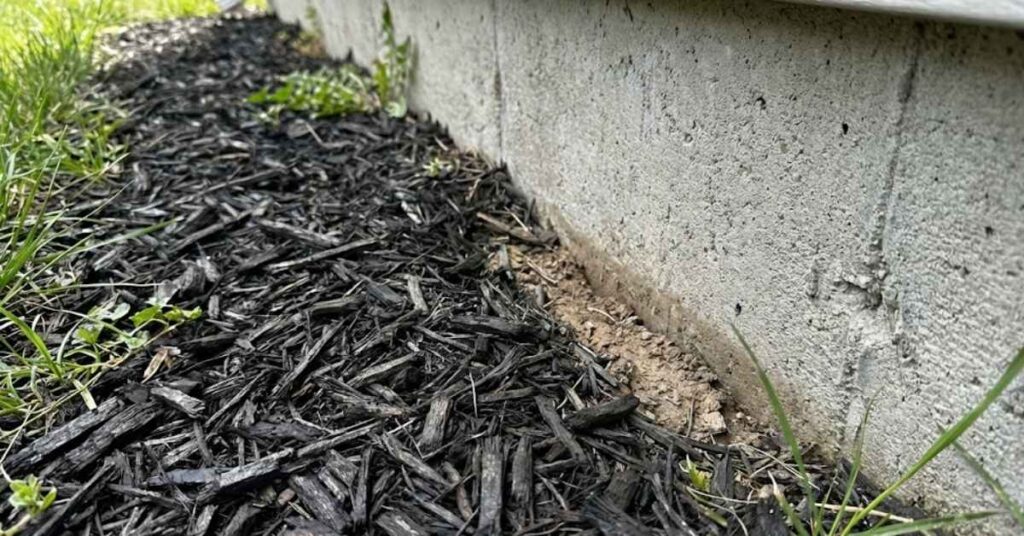
The short answer: No more than any other wood mulch. Does black mulch attract termites is a myth. Termites like large chunks of wood buried deep in the soil. Hardwood black mulch spread 2 inches thick isn’t a feast for them.
However, black bugs in lawn or black mould bugs (like fungus gnats) might appear if the mulch stays soggy. If you see tiny black eggs on grass blades, keep an eye out for pests, but usually, it’s just the environment being too wet.
Managing Your Black Mulch Flower Beds
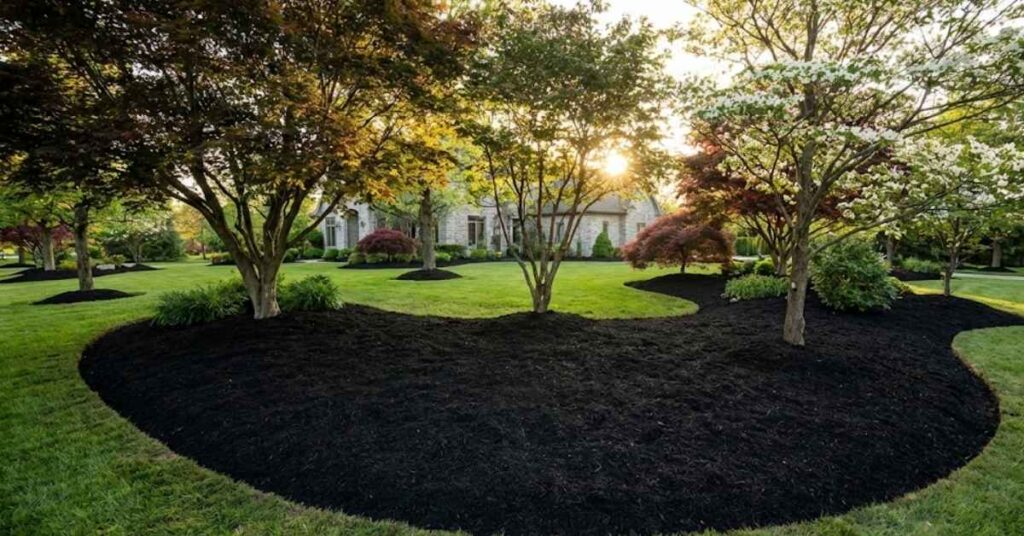
When laying down best bagged black mulch, keep it away from the stems of your plants. I call this the “Mulch Volcano” mistake. If you pile mulch against a tree trunk, you get black mold tree rot and black sooty mould on plants.
Pro Tips for Application:
- The 3-Inch Rule: Never go deeper than 3 inches.
- Stay Clear: Keep a 2-inch gap between the mulch and the plant stem.
- Wear Gloves: Dye mulch black will stain your skin for days. I learned this the hard way before a wedding once. I looked like I had frostbite on my fingers.
Check our raised bed soil calculator if you are filling new boxes before topping them with best black mulch brand products.
Conclusion
Black dyed mulch is a fantastic tool for curb appeal, but it requires a bit of “grumpy” maintenance. You need to flip it to avoid black mulch mold, watch the temperature so you don’t fry your plants, and accept that black mulch in a garden will eventually fade. Whether you choose black mulch vs dark brown, the goal is the same: protect the soil and make the neighbors jealous.
Frequently Asked Questions
1. What is black mulch dyed with?
Most black dyed mulch is colored with carbon black, which is essentially charcoal. High-quality brands use vegetable-based dyes that are safe for pets and kids.
2. Does black mulch fade?
Yes. Expect black yard fungus and UV rays to take their toll. Most black garden wood chips will need a “top-off” layer every year to stay dark.
3. How to treat black sooty mold on trees?
Black sooty mold isn’t the primary problem; it’s a symptom of pests like aphids. Kill the bugs with neem oil, and the mold will dry up and flake off.
4. Is black mulch toxic?
As long as it isn’t made from old CCA-treated lumber, it’s not toxic. Look for the Mulch & Soil Council certification to be 100% sure.
5. What is black mulch made of?
It’s usually recycled softwoods or hardwoods. Some triple black mulch is made from shredded bark, while cheaper versions use pallet wood.
6. Does black mulch attract bugs?
It doesn’t “attract” them more than soil does, but it provides a damp habitat. If you see black bugs in lawn areas, it’s likely due to moisture, not the color of the mulch.
7. Black mission vs brown turkey figs: which is better for mulch?
Both trees benefit from mulch for moisture retention. However, black mission figs prefer slightly warmer soil, which black mulch provides in the spring.
8. What causes black slime mold in lawn?
Warm, wet weather and decomposing organic matter. It looks gross but is generally harmless to your grass.
9. Why am I seeing black spots on grass blades?
This is usually a fungal disease like leaf spot. It happens when the grass stays wet for too long at night.
10. What is the best black mulch?
The best black mulch brand is usually a triple black mulch or black velvet mulch that uses hardwood rather than pallet scrap.
11. Can I mix black and brown mulch?
You can, but black and brown mulch mixed usually looks messy once it starts to fade. It’s better to stick to one color for a clean look.
12. How is black mulch made to stay dark?
Manufacturers use a high-pressure spray to coat the wood fibers with mulch black dye.
13. What are the black spots on my grass?
It could be black spot lawn fungus or spores from black lawn mold. Raking and reducing water usually fixes it.
14. What makes black mulch black?
Carbon-based pigment. It’s the same pigment found in things like eyeliner and black plastic.
15. How to identify black lawn fungus?
Look for black lawn fungus identification pictures online to distinguish between grass black spots (leaf spot) and black lawn mold (slime mold).
16. What is black pearl slime mold?
A specific type of black slime on soil that looks like tiny dark beads. It’s a sign of a very healthy (and very wet) ecosystem.
Related Post:
