
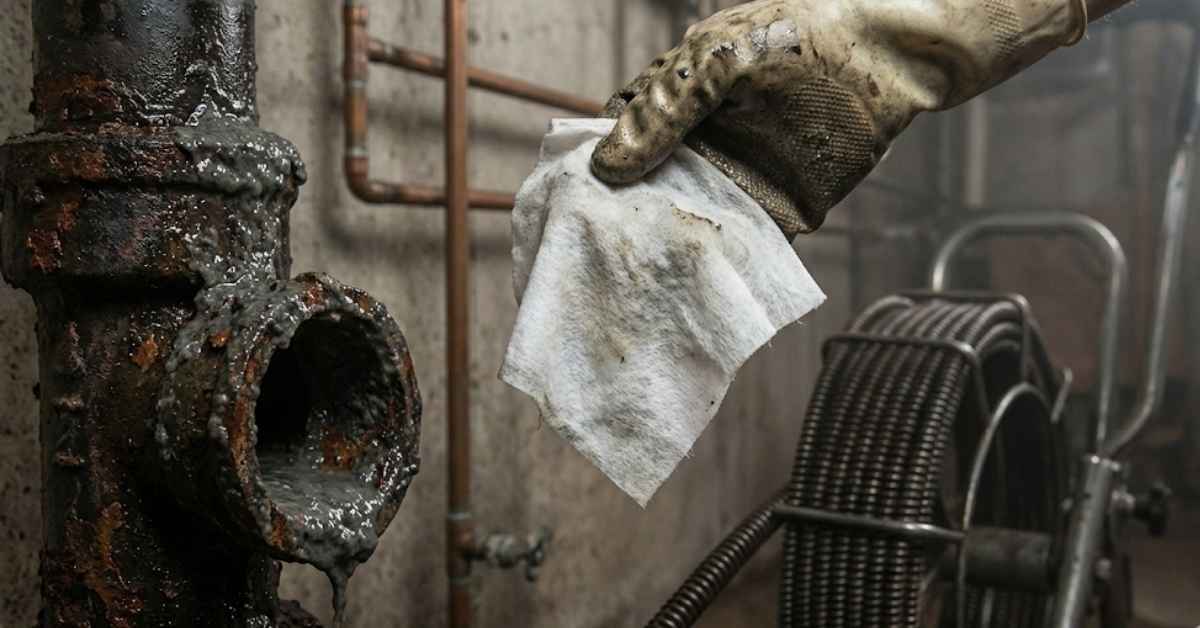
I’ve spent three decades elbow-deep in the messy reality of American plumbing. I’ve smelled things that would make a landfill worker weep and pulled enough “flushable” wipes out of cast iron pipes to knit a sweater for a giant. Here is the cold, hard truth: “flushable” is a marketing lie designed to separate you from your money and then keep guys like me in business.
Every time you flush one of those moist towelettes, you are playing Russian roulette with your main sewer line. Your toilet isn’t a trash can. It’s a precision instrument meant for water, waste, and toilet paper that actually dissolves. Anything else is just a ticking time bomb waiting to explode in your basement.
Are flushable wipes actually flushable?
No, flushable wipes are not actually flushable because they do not disintegrate in water like toilet paper. These wipes are made of synthetic fibers and plastics that remain intact, snagging on pipe imperfections and grease to create massive blockages known as fatbergs that can cost thousands to repair.

The $5,000 Lie in a Plastic Package
The industry uses the word “flushable” because technically, the wipe will go down the hole. So will a golf ball or a set of car keys, but that doesn’t mean you should do it. Real toilet paper is designed to fall apart the second it hits the water. Go ahead and put a square of TP in a jar of water and shake it. It turns to mush. Do the same with a “flushable” wipe. It stays as strong as a gym towel.
When that wipe hits your lateral line, it doesn’t vanish. It travels until it finds a rusted metal burr, a tree root, or a blob of kitchen grease. Then it snags. Then the next wipe snags on that one. Before you know it, you have a solid mass the size of a football blocking your waste. According to the Environmental Protection Agency (EPA), these non-dispersible items are a primary cause of municipal sewer overflows and costly home repairs.
Plumbing Material vs. Wipe Durability
| Material Type | Breakdown Time in Water | Risk Level | Average Repair Cost |
| Standard Toilet Paper | 30 – 60 Seconds | Low | $0 |
| “Flushable” Wipe | 24+ Hours (often never) | Critical | $500 – $5,000 |
| Facial Tissue (Kleenex) | 15 – 30 Minutes | Medium | $200 – $600 |
| Paper Towels | 2+ Hours | High | $300 – $800 |

The Hidden Connection to Tooth Enamel Protection
You might wonder what your toilet has to do with your teeth. It’s about the “hard surface” myth. Many people use these wipes because they want a deeper clean, much like how people scrub their teeth with hard bristles or abrasive “whitening” pastes. Just as those wipes destroy your pipes, over-aggressive cleaning can strip your tooth enamel.
Once you wear down a surface, whether it’s the protective glaze on your porcelain toilet or the enamel on your molars, it’s gone for good. Using high-acid cleaners or abrasive wipes on your fixtures creates a gritty texture that actually traps more bacteria. You end up working harder to fix a problem you created yourself. We’ve covered more on household maintenance myths at hometoolcreatives.com that show how “over-cleaning” usually backfires.
3 Ways to Save Your Pipes (and Your Sanity)
If you can’t live without that extra-clean feeling, I’m not here to judge your bathroom habits. I’m just here to save your bank account.
- The Trash Can Method: If you must use a wipe, put it in a lined trash can. Treat it like a diaper. If it feels “gross,” buy a can with a tight-sealing lid.
- The Bidet Alternative: A simple bidet attachment costs about $40 and takes 15 minutes to install. It uses water, saves the pipes, and pays for itself in two months.
- The Jar Test: If you don’t believe me, take a “flushable” wipe and put it in a Tupperware container with water. Leave it for a week. When you see it still perfectly intact seven days later, you’ll stop flushing them.
We see these issues pop up constantly in our News category updates, especially as older home infrastructure struggles with modern products. Don’t let a $4 pack of wipes turn into a $4,000 excavation project in your front yard.
Trust Your Gut, Not the Label
Labels are written by lawyers and marketers, not the guys who have to snake your drains at 2 AM on a Sunday. If a product feels like fabric, it’s because it is fabric. Fabric belongs in the laundry or the trash, never in the sewer.
Check out hometoolcreatives.com for more no-nonsense guides on keeping your house running without the fluff. I’ve seen enough flooded basements to last a lifetime. Don’t let yours be next. For more updates on home safety, visit our News category.
Related Post:
