

I walked out to my rose garden last July and almost had a stroke. Those metallic green jerks—Japanese beetles—had turned my prize-winning petals into something resembling a piece of Swiss cheese. It’s January 28, 2026, and while the ground is currently frozen solid in most of the US and Canada, I’m already losing sleep over these pests. If you wait until summer to think about them, you’ve already lost.
I’m grumpy because the big-box stores want to sell you “miracle” traps that actually invite every beetle in a three-mile radius to a swingers’ party in your yard. It’s a scam. You don’t need overpriced corporate toxins that kill the bees and butterflies too. You need a strategy that hits them where they live, eat, and breed. Let’s look at the real way to handle this without turning your backyard into a superfund site.
How to get rid of Japanese beetles naturally?
To get rid of Japanese beetles naturally, combine hand-picking in the early morning with applications of Milky Spore or beneficial nematodes to the lawn. Use Neem oil as a organic repellent on foliage. Avoid pheromone traps, as they often attract more beetles to your property than they actually capture.
The Great Beetle Trap Scam
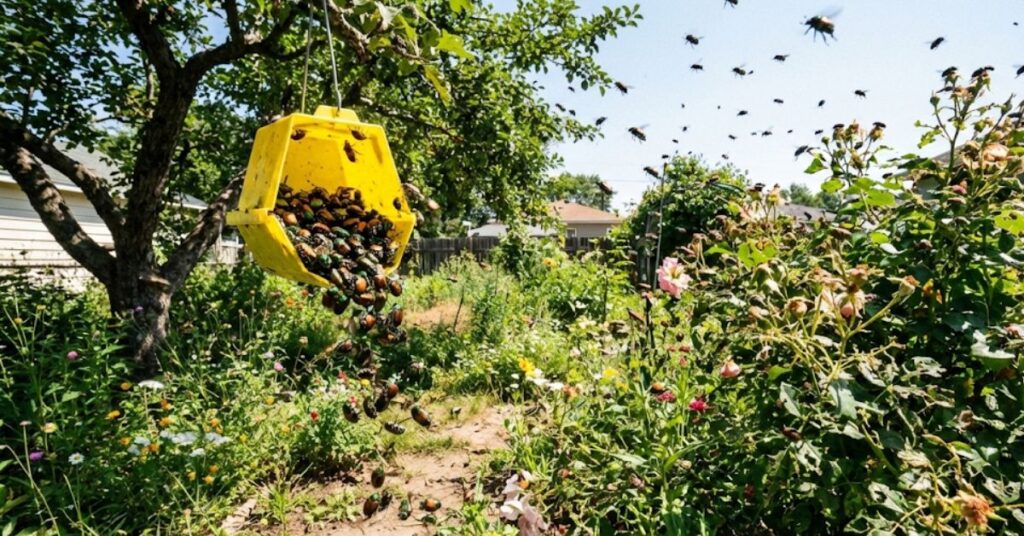
I’m going to be blunt: those yellow bag traps are the worst thing you can buy. They use pheromones to lure beetles. The problem? They are too good at it. You might catch five thousand beetles, but you’ve attracted ten thousand to your yard to get the job done. It’s like trying to put out a fire with a squirt gun filled with gasoline.
We avoid these traps because they create a “lure” effect so that your neighbors’ beetles end up on your hibiscus. Unless you’re putting that trap in a neighbor’s yard you don’t like (don’t do that, it’s mean), keep it out of your garden.

The Morning “Bucket of Death” Routine
If you want a chemical-free garden, you have to get your hands a little dirty. In the early morning, Japanese beetles are sluggish. They haven’t had their coffee yet. I go out with a bucket of soapy water—just a squirt of Dawn will do—and I flick them right into the drink.
They have a “drop” defense mechanism. If you touch the leaf, they let go and fall. Position your bucket underneath the leaf because they’ll tumble right into the suds so that they can’t fly away. It’s satisfying, it’s free, and it’s the most effective way to protect individual plants like roses or raspberries.

Neem Oil: The Organic Shield
For the plants you can’t hand-pick, use Neem oil. I hate the smell—it’s like a mix of garlic and old peanuts—but the beetles hate it more. It contains azadirachtin, which messes with their ability to eat and grow.
You need to spray this in the evening because the sun can cook your leaves if they’re covered in oil during the heat of the day. We use Neem because it serves as a repellent and an anti-feedant so that the beetles find your garden tastes like garbage and move along.
Natural Beetle Control: Effort vs. Efficiency
| Method | Effort Level | Success Rate | Best Timing |
| Hand-Picking | High | 90% | Early Morning (June/July) |
| Milky Spore | Low | 70% (Long-term) | Spring/Fall (Now!) |
| Neem Oil | Medium | 60% | Weekly during active season |
| Nematodes | Medium | 75% | Late Summer/Early Fall |
The Long Game: Attacking the Grubs
It’s January, and right now, the future of your garden is sleeping under your lawn. Japanese beetles start as white grubs that eat your grass roots. If you kill the grubs now, you don’t have beetles in June.
I’m a big fan of Milky Spore (Paenibacillus popilliae). It’s a bacterium that only kills beetle larvae. You apply the powder to your turf because it creates a biological barrier in the soil so that the grubs die off before they ever grow wings. According to the USDA, Milky Spore can stay active in your soil for ten years or more. It takes a season or two to fully establish, but it’s the best way to stop the cycle for good.
If you’re planning out your garden beds for the spring, check out our Raised Bed Soil Calculator to make sure you’ve got the right environment for healthy, resilient plants.
Plants They Actually Hate
If you’re tired of losing the war, stop planting their favorite snacks. Japanese beetles love lindens, roses, and grapes. If you plant “trap crops” like geraniums, they actually get intoxicated and fall off the plant, making them easy pickings for your soapy bucket.
However, if you want a garden they’ll ignore, look into native species. They generally leave boxwoods, dogwoods, and lilacs alone. We choose resistant plants because it lowers the overall “scent profile” of your yard so that beetles aren’t tempted to stop by in the first place.
Quick Answers (Because I Know You’ll Ask)
When is the best time to treat for Japanese beetles?
You treat the adults in the summer (June through August). However, you treat the larvae (grubs) in the spring or fall. In 2026, with the weird weather patterns we’re seeing in the Midwest and South, keep an eye on soil temperatures—once the frost breaks, it’s time to act on the lawn.
Does dish soap and water really kill them?
Yes. The soap breaks the surface tension of the water and coats the beetle’s shell, essentially suffocating them. It’s the cheapest, most effective “pesticide” on the planet.
Will vinegar kill Japanese beetles?
It can, but I don’t recommend it. Vinegar is a non-selective herbicide. If you spray enough to kill a beetle on your rose bush, you’re probably going to kill the rose bush too. Stick to the soapy water bucket.
Do birds eat Japanese beetles?
Some do, like starlings and grackles, but not enough to solve an infestation. Don’t rely on the local bird population to save your vegetable patch. You need to be the primary predator.
How long do Japanese beetles stay around?
The adult feeding frenzy usually lasts about 4 to 6 weeks. After that, they lay eggs in your lawn and die. That’s why lawn treatment is so vital for next year’s success.
Can I use Row Covers to protect my vegetables?
Absolutely. Fine mesh row covers work wonders for beans and other veggies. We use these because they create a physical wall so that the beetles simply can’t reach the leaves to feed or lay eggs.
Final Thoughts from the Garden Trenches
Look, I know it’s frustrating. You put in the work, and these shiny little monsters show up to ruin the party. But don’t reach for the heavy-duty nerve agents. You’ll kill the bees, and then you won’t have any fruit or flowers anyway.
Be the grumpy gardener. Get out there with your bucket, treat your lawn with Milky Spore, and stop falling for the trap ads on social media. If you want to stay updated on the latest 2026 pest outbreaks or find out which new “organic” sprays are actually just expensive water, keep an eye on our News section. I’m currently tracking a new fungal treatment out of Iowa State University that looks promising.
Visit hometoolcreatives.com for more brutally honest advice on keeping your house and garden from falling apart.
Related Post:
