

I was out in my raised beds yesterday, trying to see if my winter kale had finally given up the ghost, and what did I find? A massive mound of dirt right at the base of my kale, crawling with enough ants to carry off a small child. It’s January 2026, and even with the weird “weather whiplash” we’re having in the US and Europe, these pests are already waking up and looking for a snack.
I’m grumpy because every time I go to the big-box hardware store, the “solution” in the garden aisle is a bottle of neon-colored poison that says it kills everything from ants to small dinosaurs. I don’t want that stuff near my tomatoes, and I definitely don’t want my lab, Buster, licking it off the mulch. You shouldn’t have to choose between a bug-free garden and a healthy pet.
What is the best way to kill ants in a vegetable garden safe for pets?
To kill ants in your vegetable garden safely for pets, use boiling water on nests away from plant roots or apply Food Grade Diatomaceous Earth to dry soil. For tough colonies, use Borax and sugar baits hidden inside a sealed, pet-proof container to prevent accidental ingestion.

Why Ants Love Your Veggies (It’s Not the Broccoli)
Before you start pouring stuff into your dirt, you need to understand why the ants are there. Most of the time, they aren’t even interested in your vegetables. They are there because you have aphids.
Aphids are tiny, sap-sucking jerks that poop out a sugary liquid called “honeydew.” Ants love this stuff. They actually “farm” the aphids, protecting them from ladybugs just so they can keep eating that sugar. If you get rid of the aphids with a blast of the hose or some Neem oil, the ants will often pack their bags and move to the neighbor’s yard.
We address the aphids first because if you just kill the ants, the honeydew stays, and a new colony will move in within a week. You have to break the food chain so that the ants have no reason to stay.
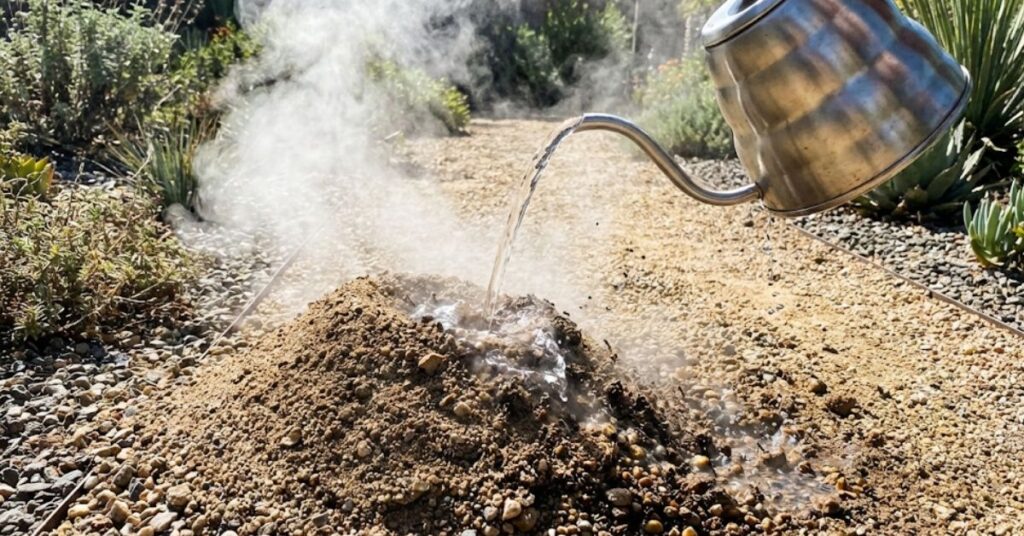
Method 1: The “Free and Lethal” Boiling Water Trick
If you can see the nest—usually a mound of excavated soil—you have the ultimate weapon in your kitchen right now. Boiling water.
I like this method because it costs exactly zero dollars. You just boil a kettle and pour it directly into the center of the mound. It collapses the tunnels and kills the queen on contact.
Warning from the Grumpy Columnist: Boiling water doesn’t care if it’s hitting a bug or a plant. If the nest is right against your pepper plants, the water will cook the roots. Use this only for nests in paths, between pavers, or on the edges of your beds.
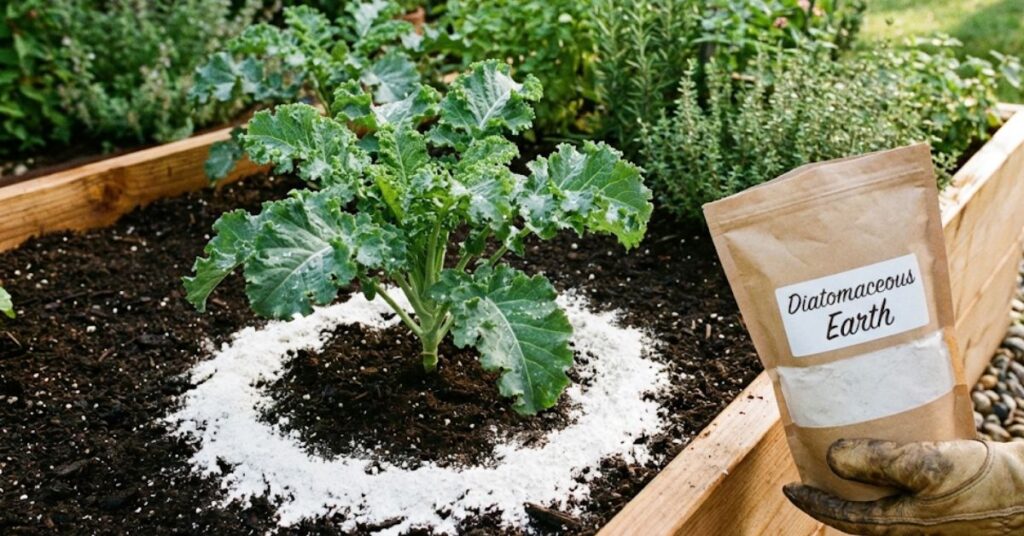
Method 2: Diatomaceous Earth (The Sharp Dust)
If the ants are scattered all over your Raised Bed Soil, you need Food Grade Diatomaceous Earth (DE). This stuff looks like flour, but it’s actually the fossilized remains of tiny sea creatures called diatoms.
To an ant, DE is like walking over a field of broken glass. It cuts through their exoskeleton and dries them out. I use it because it’s completely non-toxic to dogs, cats, and humans. In fact, some people put it in their pets’ food to kill worms.
How to use DE without making a mess:
- Wait for a dry day: DE doesn’t work when it’s wet. It turns into a useless paste.
- Apply to the soil: Sprinkle it around the base of your plants and along the ant trails.
- Wear a mask: It’s just dust, but it’s fine dust. You don’t want it in your lungs, and Buster doesn’t want it in his nose either.
Method 3: The Borax Bait Station (The Tactical Move)
Sometimes you can’t find the nest. In that case, you have to let the worker ants do the work for you. Borax (sodium borate) is a mineral that messes with an ant’s stomach. If you mix it with sugar, they’ll carry it back to the queen, and the whole colony goes “poof.”
Now, Borax isn’t “poison” like the commercial stuff, but it’s not exactly a health food. If your dog eats a big glob of Borax and sugar, he’s going to have a very bad day.
How to make it pet-safe:
- Mix 1 part Borax with 3 parts sugar.
- Add a little water to make a paste.
- Put a glob inside a small Tupperware container.
- Punch tiny holes in the lid—just big enough for an ant, but too small for a dog’s tongue.
- Tape the lid shut and weigh it down with a rock.
We use this contained method because it keeps the “bait” away from your pets’ curious noses so that the only things eating it are the target pests.
Ant Control Comparison Table (2026 Prices & Safety)
| Method | Estimated Cost | Safety Rating (Pets) | Effectiveness | Best Use Case |
| Boiling Water | $0.00 | High | High (Immediate) | Nests in paths or borders |
| Food Grade DE | $15 – $25 | High | Medium (Slow) | General soil application |
| Borax Baits | $5.00 | High (if contained) | Extreme | Hidden colonies |
| Vinegar Spray | $2.00 | High | Low (Repellent) | Temporary trails |
| Beneficial Nematodes | $30.00 | High | High (Long-term) | Large-scale lawn infestations |
Natural Repellents: The “Keep Away” Strategy
If you just want to keep the ants from climbing your fruit trees or entering your greenhouse, you can use things they hate. According to research from Clemson University Cooperative Extension, ants rely on pheromone trails to navigate. If you mess up their “GPS,” they get lost.
- Cinnamon: They hate the smell and the texture. It’s like a “No Entry” sign.
- Peppermint Oil: A few drops of pure peppermint oil mixed with water makes a great spray for the rims of your pots.
- Vinegar: Spraying a 50/50 mix of white vinegar and water on ant trails erases their scent markers.
I use these because they are safe for the garden and the cat so that the ants stay in the woods where they belong.
Quick Answers (Because I Know You’ll Ask)
1. Is it okay to have ants in my vegetable garden?
A few ants are fine. They aerate the soil and eat some small pests. But if you see them “herding” aphids or building massive mounds that disturb your plant roots, it’s time to act.
2. Can I use Borax directly in the soil?
No. Borax is a source of boron, and while plants need a tiny bit of it, too much will kill them. Keep the Borax in a container or bait station to avoid ruining your dirt.
3. Does vinegar kill ants or just repel them?
Vinegar is a contact killer if you spray them directly, but mostly it’s a repellent. It doesn’t kill the colony, it just makes them take a different route.
4. What is a pet safe ant killer for the garden?
Food Grade Diatomaceous Earth is the gold standard for pet safety. It’s effective, mineral-based, and harmless if ingested by mammals.
5. Will ants eat my vegetables?
Usually no. They might nibble on very sweet fruit like strawberries or overripe tomatoes, but they are mostly there for the aphid honeydew or to scavenge dead insects.
6. Do orange peels kill ants?
They contain d-limonene, which is toxic to ants. Boiling orange peels in water and pouring that water on a nest is a great, safe alternative to plain boiling water.
7. How do I get rid of ants in my raised garden bed?
DE is best for raised beds. Since the soil is contained, you can create a perimeter of DE around the inside of the wood frame to stop them from entering.
The Grumpy Final Word
Look, you don’t need a degree in chemistry to have a clean garden. You just need to be smarter than a bug. Most of the time, ants are just a symptom of a different problem (like those aphids I mentioned). Fix the source, use some boiling water or a bit of DE, and keep your dog out of the Borax.
If you’re planning on adding more beds this spring, check out our News section to see what’s happening with 2026 lumber prices. I’m hearing cedar might be a bit cheaper this year—fingers crossed.
Related Post:
