
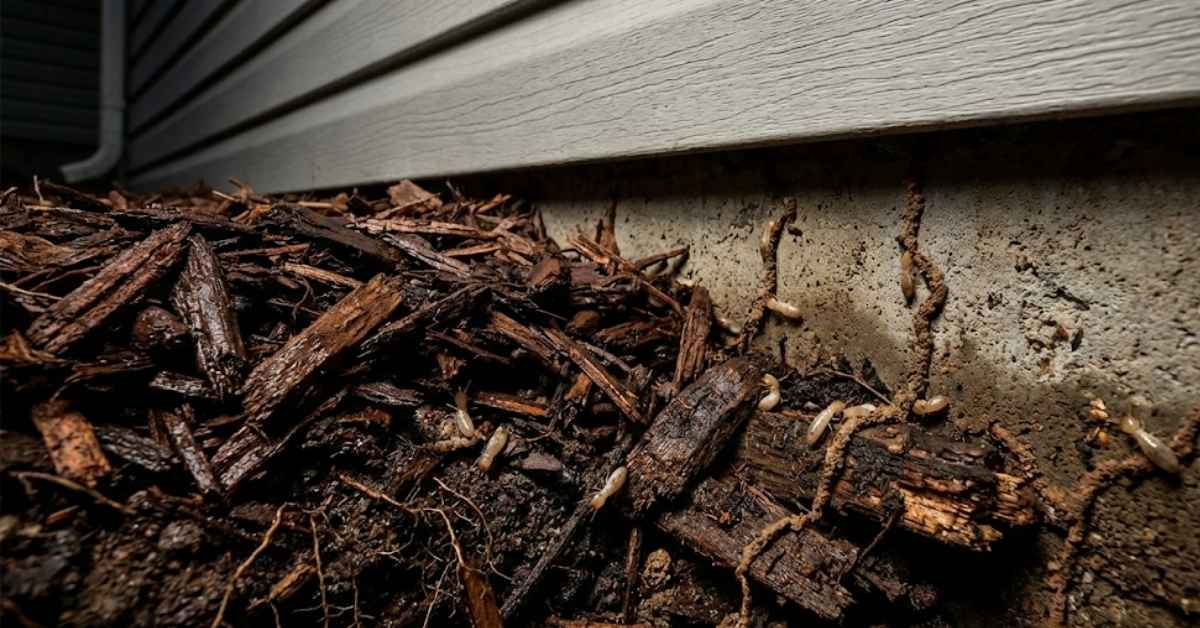
I have seen enough termite damage to fill a football stadium. Every year, homeowners spend thousands on “premium” wood mulch so that their flower beds look like a magazine cover. Then they call me six months later because their floorboards are soft and their siding is full of holes. They think they are helping their plants, but they are really just building a climate-controlled interstate for pests to eat their house.
If you pile mulch right up against your foundation, you are asking for trouble. It’s not just about the wood. It’s about the environment you are creating. Thick mulch holds onto moisture like a sponge. That damp, dark space is a paradise for bugs that hate the sun and love rot.

Why does mulching too close to your house attract bugs?
Mulching too close to your house attracts bugs because wood mulch retains moisture and provides a direct, hidden path for termites and ants to reach your siding. A 6 to 12 inch gap of bare ground or gravel prevents pests from bridging the gap into your foundation.
The “Bug Bridge” You Created for Free
Wood mulch is basically a buffet for subterranean termites. They live in the soil and search for cellulose. When you put a two-inch layer of wet wood right against your house, they don’t even have to come up for air to find your rim joist. I have seen “mulch volcanoes” piled up against tree trunks and house walls that smell like damp rot and sour vinegar.
This moisture also attracts carpenter ants and cockroaches. They love the texture of the decomposing organic matter. According to the , maintaining a “dry zone” around the perimeter is the most effective way to stop wood-destroying organisms. If the soil is dry and exposed to the sun, the bugs stay away because they don’t want to dry out and die.
Mulch Type vs. Pest Attraction Risk (2026 Data)
The Grounding Connection: Why You Should Touch the Dirt
Since we are talking about dirt, let’s talk about why you should actually get your hands in it. People call it “Earthing” or “Grounding.” It sounds like some expensive wellness trend, but it’s actually just biology. When you touch the soil with your bare skin, you are picking up electrons.
There are real earthing benefits for your body. Working in the garden without gloves for a few minutes can lower your stress levels and help with inflammation. I know, I sound soft, but even a grumpy guy like me can feel the difference. The texture of gritty sand and the cool damp earth under your fingernails does something to the brain. Researchers at the have looked into how these electrical charges from the earth can impact human health. Just make sure you aren’t touching dirt that’s infested with the termites you invited over with your bad mulching habits.

4 Rules to Fix Your Mulch Mistake
You don’t have to get rid of your garden beds. You just need to be smarter than the bugs.
- The 6-Inch Rule: Keep a six-inch “no mulch zone” between your house and your garden beds. Use gravel or bare dirt so that you can see if termites are building mud tubes.
- Pull It Back: If you see mulch touching your siding, grab a rake and move it. You should always see the concrete of your foundation.
- Choose Cedar: If you must mulch near the house, use cedar. It has natural oils that pests hate, though it won’t stop them if you pile it too deep.
- Watch the Water: Make sure your downspouts aren’t dumping water directly into your mulch. A wet mulch bed is an invitation for every pest in the neighborhood.
We see these landscaping mistakes all the time in our . People try to make things look “pretty” and end up breaking the structural integrity of their homes.
Stop Feeding the Pests
I love a good-looking yard as much as anyone, but I love a solid house more. Stop treating your foundation like a garden bed. Use rocks near the house and keep the wood for the trees in the backyard. It saves you money on pest control and keeps your house from becoming a giant snack.
For more practical advice on keeping your home from falling apart, stay tuned to our . We’re always looking at to help you avoid the expensive traps that corporate marketing departments set for you.
Related Post:
